
“Our doubts are traitors, And make us lose the good we oft might win By fearing to attempt.”
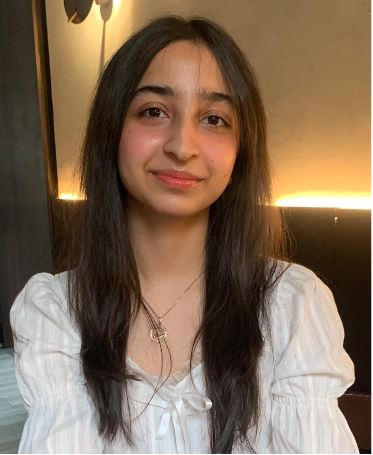
BY: Mehrbano Hussain
Shakespeare’s admonition in Measure for Measure rings with meagre consolation as the glass doors of Third Culture Coffee’s DHA branch are pushed inwards. My head swivels excitedly towards the source of the noise, only to inch downwards in disappointment – just more unfamiliar faces, none of the people I had invited to my fundraiser.
In the disconcerting quiet that followed, the line felt less like poetry and more like a working description of what it means to design civic solutions inside real public systems: the good is often lost not for lack of vision, but for fear of the friction that infrastructure, regulation, and habit place in the way. In the days leading up to the fundraisers, I had meticulously arranged all the logistics and organised the event details, yet at that moment, it seemed nothing was going according to plan.
It is only apropos, however, that I take you to the very beginning: the verbatim moment when the idea of a ‘Tonga Library’ was born. We had all sat in a circular formation – my project manager, fellow member, Ms Sana Yazdani (the head of marketing and communication at Alif Laila Book Bus Society), and Sir Muhammad Kashif (the sales and outreach manager) – as we grappled with the enormity of embarking on a project that heralded not only Pakistan’s but also the world’s first Tonga (horse-driven) library. The seeds of hope had already taken root in all our minds.
There were three chief matters we had concluded: the principal aim behind this project was to foster a public culture around reading and the habit of reading for pleasure, it would target the populated, low-literacy areas of Lahore, and it would involve a horse to invoke the lost sense of heritage, communality, and childhood.
We were not prepared to budge on these; how misguided we were about the last one! Looking back, that early certainty was itself a design assumption — the belief that a new civic form could be inserted into the city largely on its own terms. And so commenced our quest to screen through a sample of four potential areas, selecting the one most compatible with the aims of our project.
Through our surveys in localities like Wahdat Colony, we ascertained the age demographics, literacy levels, general attitude towards reading, storytelling culture, and the willingness of both children and their parents to have the Tonga come to their neighbourhood for a few hours each week. It was heartwarming for all of us (the Alif Laila team and my fellow project members) to receive such an enthusiastic and positive response from the majority of the children we surveyed. We were fortunate not to face any apprehension from the parents as well. Up till that point, it was a rather smooth sail; in retrospect, it was simply the calm before the storm. As our collective efforts began solidifying into a concrete initiative, we found the need to seek expert architectural guidance on the Tonga’s structural design, stability, and functionality given that it’s being repurposed as a mobile library.
For this reason, I interviewed Mr Kalim Siddiqui and Mr Osman Ali, sharing all the relevant details of this project with them to confirm whether we were proceeding in the right direction and what our next steps would look like. Coming out of both interviews, I was more and more dubious that a horse driven cart was the most suitable option for this library. With weather durability, health unpredictability, and legal concerns surrounding the use of horses, Mr Siddiqui and Mr Ali pointed me in the direction of what they believed, with their experience and knowledge in this field, a better alternative: electric vehicles.
However, if my team and I still wished to proceed with a tonga library, they advised me that I would need to procure a permit first and foremost. And I was soon to discover that this would be the decisive moment that determined the future of our project. Very enthusiastically, I began drafting what was meticulously titled Request for Permit to Operate a Horse-Drawn Mobile Library in Lahore and emailed it immediately to IP Shakeel Ahmed, PSO.
In my mind, there was no doubt we would get our approval – we were championing social progress by fostering a public culture around reading and storytelling. Of course, that is how circumstances would unfold in an idyllic and fair world; instead, I was slapped with a perfectly bureaucratic, “Animal-driven carts are not permitted at the desired roads.” That refusal was not merely administrative inconvenience. It was the city itself speaking through its regulations, revealing how public infrastructure and the categories it uses to organise movement and space can quietly veto even the most carefully prepared civic idea.
Henceforth, all our efforts to breathe life into the Tonga Library appeared to be sucked into a vortex of futility and despair. It did not matter that I salvaged an initially fruitless fundraiser by raising more than thirty-thousand rupees in two hours from people in the coffee shop and on the streets. It did not matter that we had a collection of spectacular truck art submissions to be painted onto the Tonga.
And…it did not matter that this project would have been the first of its kind. We could either capitulate to the test of Fortuna as our punctured boat sank perilously fast or take the leap of faith and embrace the unknown waters headfirst.
So, I believe my team and I paid great heed to Shakespeare’s exhortation – setting aside our fears for the good we might win by simply endeavouring. In essence, we embraced a volte-de-face – pivoting our focus from building new libraries that could not be spatially accommodated to integrating them in spaces that remain unutilized. In a span of a mere five months, another brilliant idea was born: holding storytelling sessions inside mosques during the time between two consecutive prayers. These spaces often remain empty outside of prayer-time, yet possess inordinate potential to favourably influence the attitudes and approaches of the youth. The pivot was more than a practical compromise.
It was a shift in design logic: from trying to impose a new structure on the city to working with the public and community infrastructure that already exists, carries trust, and stands empty for large parts of the day.
What the experience continues to teach me is that designing civic solutions is less about defending an original vision and more about learning to read the grain of existing public infrastructure — its rules, its empty hours, its unexpected capacities — and then reshaping an idea until the city can actually hold it. Doubts remain traitors only when they persuade us to stop attempting.
The real work of civic design begins the moment the first plan is refused. I am aware that this tale is far from its denouement: that perchance greater tests are yet to reveal themselves. However, the human spirit is a marvellous thing; once broken and stitched back together, the subsequent fracture becomes that much more improbable.
Mehrbano Hussain is a student at Lahore Grammar School Defence.