From Commemoration to Cultural Diplomacy: A Vision That Brought the Legacy of Allama Iqbal to the Forefront
An initiative that transformed a modest annual remembrance into a significant diplomatic, cultural and intellectual engagement between Mauritius and Pakistan.
Every year, 9 November is commemorated as Iqbal Day in honour of Allama Dr Muhammad Iqbal, the distinguished philosopher, poet, thinker and visionary whose intellectual contributions helped shape the ideological foundations of Pakistan. His philosophy extends far beyond the geographical boundaries of Pakistan. His message of self-realization, human dignity, knowledge, moral courage and the pursuit of excellence continues to inspire generations across cultures and societies.
In Mauritius, Iqbal Day has traditionally been observed by a few organisations, notably Friends of Pakistan, as a mark of remembrance and respect for the great philosopher. However, these commemorations have generally remained modest affairs, received limited public attention and fallen short of the wider recognition that Iqbal’s intellectual legacy deserves.
The 2026 celebrations were destined to be different.
The Vision Behind the Initiative
The initiative began when Friends of Pakistan approached Mr. Sohail Yaseen, Honorary Consul of Mauritius in Karachi, to identify an academic personality who could deliver a conference on Allama Iqbal. Mr. Yaseen brought the matter to the attention of H.E. Munsoo Kurrimbaccus, High Commissioner of the Republic of Mauritius to Pakistan.
For the High Commissioner, another relatively unnoticed commemoration was simply not enough. He saw an opportunity to transform Iqbal Day into a major cultural and intellectual event, one that would bring greater recognition to the philosopher’s universal message while strengthening the historical friendship between Mauritius and Pakistan.
He therefore took personal responsibility for shaping the initiative, mobilizing a distinguished delegation from Pakistan and securing the participation of prominent personalities who could give the occasion the stature, visibility and relevance it deserved.
His first major initiative was to approach Mr. Walid Iqbal, grandson of Allama Dr Muhammad Iqbal, and invite him to Mauritius as the principal speaker. Persuading him to undertake the journey was a significant achievement.
Mr. Walid Iqbal is not only the grandson of Allama Iqbal but also an Advocate of the High Court of Pakistan and a former Senator. He served in the Senate of Pakistan from 2018 to 2024, chairing the Standing Committees on Human Rights and Defense. An accomplished international speaker, his presence brought a unique dimension to the celebrations.
The High Commissioner was, however, determined that the programme should extend well beyond a single conference. With the help of Mr. Asad Bhugla, side complementary activities were secured with organizations such as the Urdu Speaking Union and the Muslim Youth Federation.
Building a Distinguished Delegation
An important part of the High Commissioner’s strategy was to ensure that the delegation reflected the importance of the occasion and the broader diplomatic objectives behind it.
He encouraged the two Honorary Consuls of Mauritius in Pakistan, Mr. Sohail Yasin Suleman of Karachi and Mr. Shahid Sethi of Lahore, to form part of the delegation to give it a particular significance. The delegation was subsequently further enriched by the participation of their respective spouses, as well as the spouse of Mr. Walid Iqbal, adding a personal and gracious dimension to the visit.
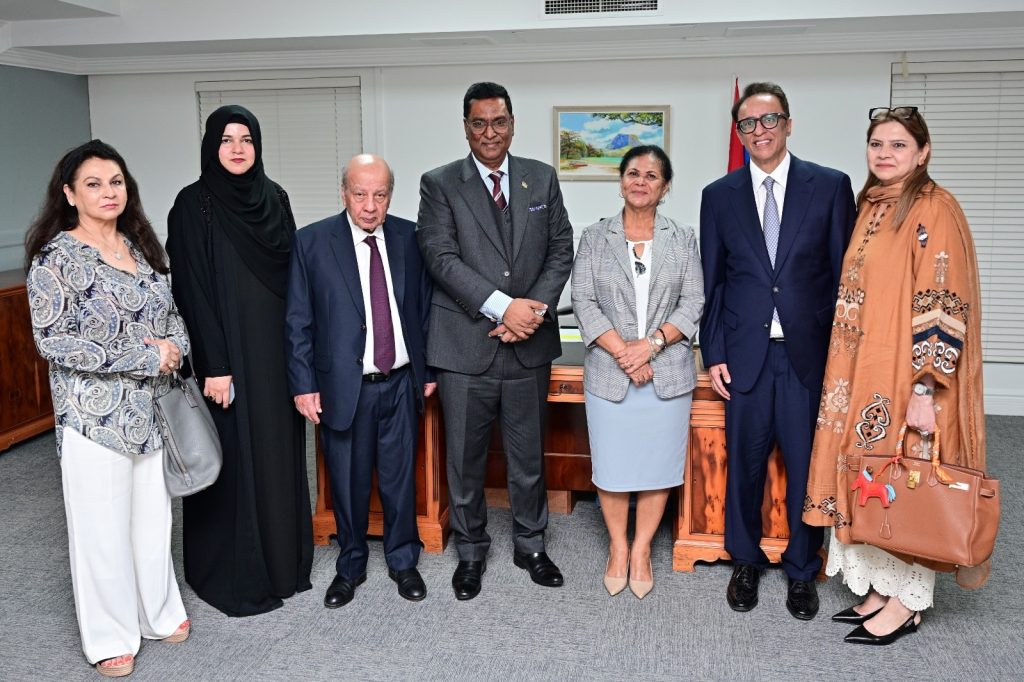
The final addition was Mr. Faisal Zahid Malik, CEO and Editor-in-Chief of Pakistan Observer, one of Pakistan’s recognized media personalities.
The composition of the delegation was therefore not incidental. It reflected an effort to bring together diplomatic, cultural and media personalities around a common purpose.
Walid Iqbal: A Voice That Connected the Past with the Present
The presence of Mr. Walid Iqbal was undoubtedly one of the defining features of the celebrations. His eloquence, command of language and deep understanding of his grandfather’s intellectual heritage gave the main conference and the associated engagements a special resonance.
His interventions went beyond a historical account of Allama Iqbal’s life and work. They brought alive the ideas, philosophical reflections and universal principles that continue to make Iqbal relevant in contemporary society. His participation also offered Mauritians a rare opportunity to engage directly with a member of Allama Iqbal’s family, adding authenticity and personal significance to the commemorations.
A Historic Engagement at State House
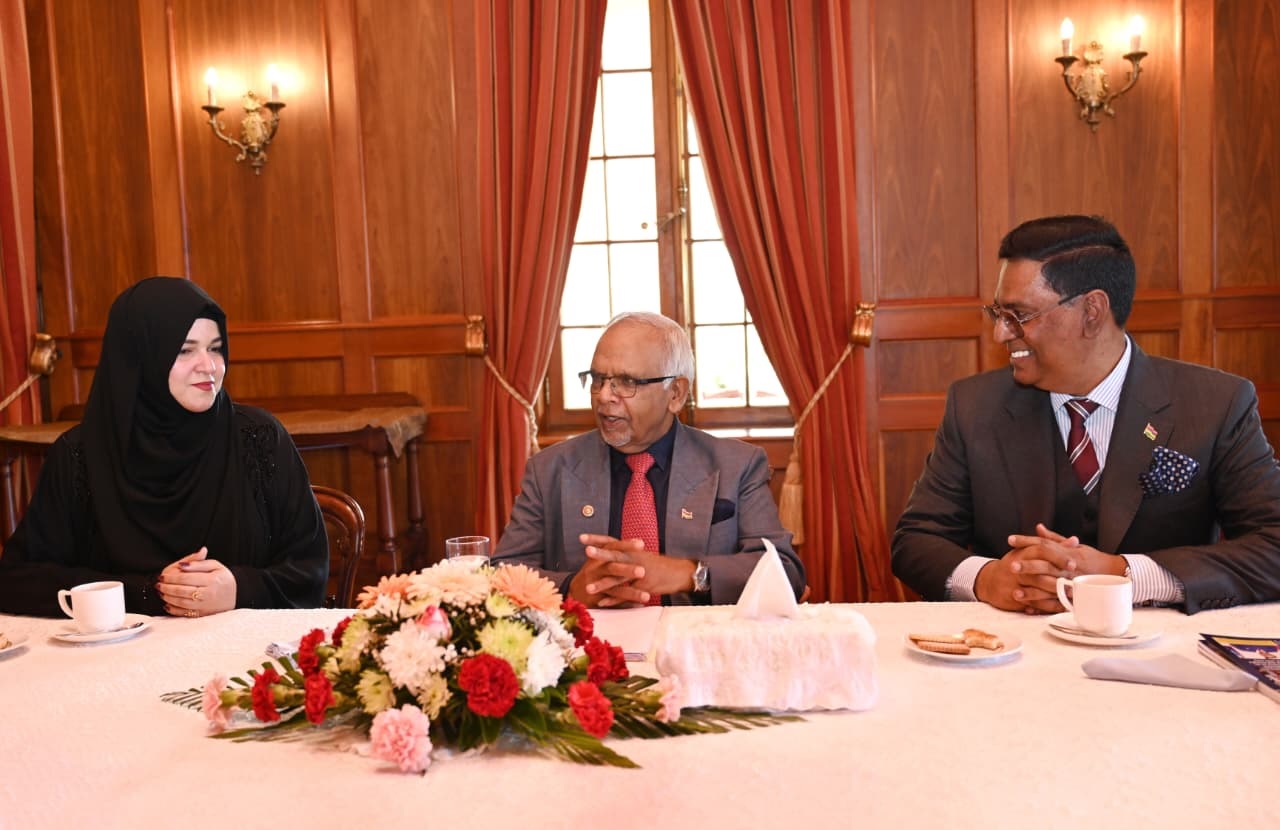
The High Commissioner arranged courtesy calls on the President of the Republic, the Deputy Prime Minister and the Minister of Arts and Culture to get recognition at the highest levels of the Mauritian State. These engagements took place on 12 November 2026, when the delegation, led by the High Commissioner, was received by His Excellency Mr. Dharamveer Gokhool, President of the Republic of Mauritius, at State House, Le Reduit, at 9.30 a.m. The Deputy High Commissioner of Pakistan to Mauritius, Ms. Khadijah Khalid Khan, also accompanied the delegation.
President Gokhool warmly welcomed Mr. Walid Iqbal and his spouse, together with the distinguished members of the delegation.
The discussions offered an opportunity to reflect on Allama Iqbal’s legacy as a shared intellectual heritage that transcends generations and national boundaries.
The President spoke about the history of Château du Reduit and its place in Mauritius’ institutional heritage, as well as his constitutional responsibilities as Head of State.
The conversation also explored the distinctive multilingual, multi-ethnic and multi-religious character of Mauritian society, with particular reference to Urdu and the many other languages that enrich the country’s national identity.
Mauritius’ experience of unity in diversity provided an important context for discussing the preservation of cultural traditions and the contribution of different communities to nation-building.
The philosophy of Allama Iqbal, particularly his celebrated verse, “Khudi ko kar buland itna”, also featured prominently in the discussion.
The concept of Khudi, or the elevation of the self, speaks to self-belief, knowledge, character, moral courage and the realisation of human potential. It was recognized that Iqbal’s poetry expresses ideas that transcend national boundaries and continue to inspire reflection on human dignity, self-realization and the pursuit of knowledge.
The longstanding diplomatic relations between Mauritius and Pakistan, formally established in 1970, were also highlighted, with both sides recognizing the importance of strengthening these ties through cultural, educational and people-to-people exchanges.
Call on the Deputy Prime Minister
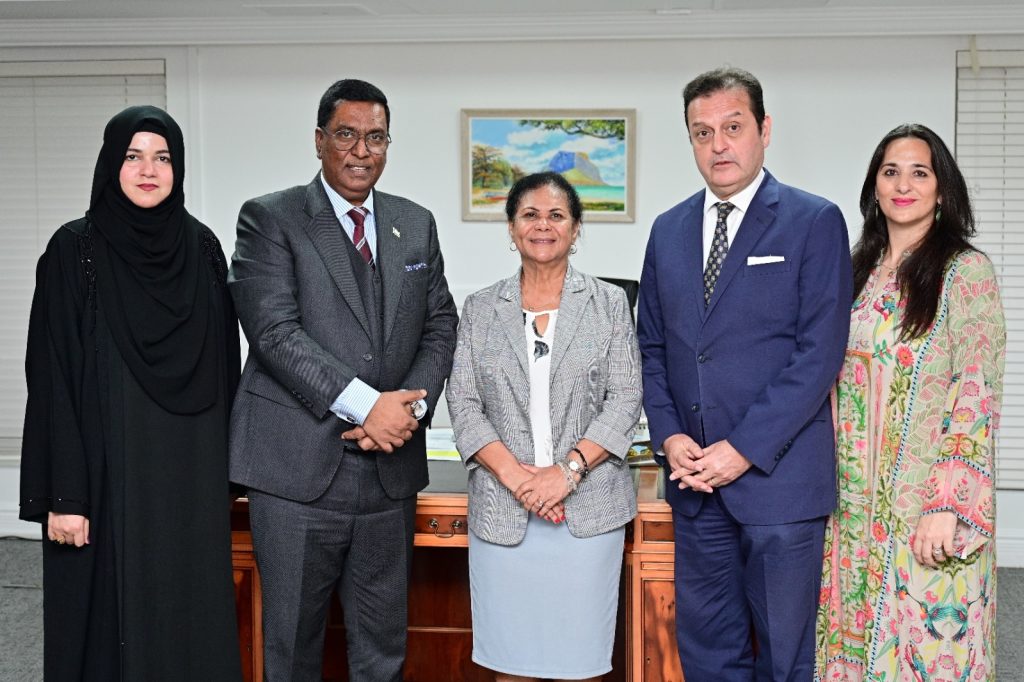
The delegation subsequently proceeded to Government House, Port Louis, where it was warmly received by the Deputy Prime Minister, the Honorable Arianne Navarre-Marie.
The discussions focused, among other matters, on the importance of protecting the family as the fundamental unit of society, with particular emphasis on the welfare, safety and protection of children.
The Deputy Prime Minister shared insights into the comprehensive legislation recently passed by Parliament to strengthen the protection of children and families.
Mr. Walid Iqbal, drawing on his experience as a former Senator and his involvement in parliamentary human rights affairs, engaged in a particularly meaningful exchange on the subject.
The discussion demonstrated how the visit could create opportunities for substantive exchanges beyond the immediate theme of Iqbal Day, touching on matters of common social concern and public policy.
Call on the Minister of Arts and Culture
Another important engagement was the courtesy call on the Minister of Arts and Culture, the Honorable Mahen Gondeea.
The Minister warmly welcomed the delegation and reflected on the rich cultural heritage of Mauritian society, its diversity and the importance of preserving the traditions that contribute to the country’s national identity. He informed that he visited Pakistan in the past and is amazed by its history and culture. The meeting was particularly relevant given that the principal Iqbal Day conference was hosted at the Islamic Cultural Centre, which operates under the aegis of the Ministry of Arts and Culture.
During the discussions, the High Commissioner made a significant proposal: that Iqbal Day should become an annual feature on the Mauritian cultural calendar. He emphasized that Allama Iqbal’s philosophy should not be viewed exclusively through the lens of one community or one country. Its universal messages of unity, human dignity, self-development, knowledge and social harmony have relevance for all segments of Mauritian society. He therefore requested the Ministry to consider closer collaboration with the High Commission and the participating organisations in developing future activities. He also proposed that future editions could be organized in more prominent national institutions, such as the University of Mauritius, to widen academic participation, encourage intellectual debate and engage younger generations. The intention is to move beyond an annual remembrance and establish Iqbal Day as a recognized platform for cultural dialogue, academic exchange and mutual understanding.
The Broader Diplomatic Significance
The High Commissioner of Mauritius played a central role at every stage: identifying the opportunity, securing the participation of prominent personalities, mobilizing the Honorary Consuls, facilitating the participation of media representation, engaging Mauritian institutions and arranging meetings at the highest levels of the State. His approach reflected a broader understanding of modern diplomacy with the level of personal commitment, planning and institutional engagement that went into making the initiative meaningful. This would not have been possible without the support of his team. He involved his whole team in Islamabad, which became his greatest support in the finality of the Initiative.
Diplomatic relations can acquire greater depth and meaning when people, institutions, cultures, intellectuals and communities are brought together. In this respect, the Iqbal Day initiative became an example of cultural diplomacy in practice. The High Commissioner and his whole team’s extensive personal involvement in conceiving and driving the initiative represented a particularly proactive approach to diplomatic engagement.
A Legacy Beyond a Single Celebration
The 2026 Iqbal Day celebrations have opened an important opportunity for Mauritius and Pakistan to deepen their cultural and intellectual relationship.
For Mauritius, they offered a renewed opportunity to appreciate the universal philosophy of one of the subcontinent’s greatest thinkers. For Pakistan, they provided a meaningful platform to share an important part of its intellectual heritage with a friendly and culturally diverse nation.
Most importantly, the initiative demonstrated that cultural diplomacy need not be confined to grand international festivals or large institutional programmes. It can begin with a simple idea, provided there is vision, commitment and the determination to turn that idea into something meaningful.
The ambition of the High Commissioner is now to ensure that Iqbal Day does not return to being an occasional or unnoticed remembrance, but becomes a lasting annual feature in Mauritius, engaging institutions, academics, young people and communities across the country.
A Note of Appreciation and Gratitude
After the successful conclusion of 2026 Iqbal Day celebrations, the High Commissioner wishes to place on record his sincere appreciation to all those whose commitment, generosity and support contributed to making the initiative a success.
He extends his warmest thanks to his two Honorary Consuls, Mr. Sohail Yasin Suleman of Karachi and Mr. Shahid Sethi of Lahore, whose support and active involvement were invaluable throughout the initiative. A special word of appreciation goes to Mr. Sohail Yasin, whose initial approach to the High Commissioner brought the starting point for this initiative to life.
The High Commissioner also expresses his profound gratitude to Mr. Walid Iqbal, whose distinguished presence, intellectual depth, charismatic personality and exceptional oratory eloquence brought a special distinction to the celebrations. His participation elevated the occasion and helped bring Allama Iqbal’s timeless message closer to the people of Mauritius.
A particularly special acknowledgement is reserved for Mr. Tariq Bhatti, whose outstanding generosity and hospitality played an indispensable role in making the visit possible. A Pakistani entrepreneur with a deep attachment to Mauritius, Mr. Bhatti graciously hosted the entire delegation throughout its stay at his beautiful tourist residence, “Blue Rawal”, in Bain de Boeuf, in the north of Mauritius. His contribution reflected a genuine spirit of friendship, generosity and patriotism. A humble personality who consistently extends his support to initiatives that promote Pakistan and strengthen its presence in Mauritius, Mr Bhatti once again demonstrated that meaningful diplomacy is often sustained by individuals who contribute quietly, generously and without seeking recognition. The High Commissioner is deeply appreciative of his exceptional support.
Finally, sincere thanks are extended to the Islamic Cultural Centre, Friends of Pakistan, the Muslim Youth Federation and the Urdu Speaking Union for their cooperation, institutional support and participation.
The High Commissioner also acknowledges the contribution of every individual who worked behind the scenes, facilitated engagements and helped bring the various activities to fruition.
The success of the 2026 celebrations was ultimately a collective achievement. It demonstrated what can be accomplished when vision is matched by commitment, when institutions work together and when individuals come forward with a shared sense of purpose.