TORONTO, JUL 5: When a record eight Arab nations began the 2026 FIFA World Cup, there was a sense that this expanded 48-team tournament could offer the strongest collective showing yet. There have been plenty of thrilling moments and compelling storylines far but as the competition reached the Round of 16, only two remained.
Saudi Arabia, Qatar, Tunisia, Iraq, Jordan and Algeria have all departed North America, leaving Morocco and Egypt to carry Arab hopes into the next phase of the tournament. The two nations’ World Cup stories are profoundly different, however, with Morocco arriving in North America with history behind it and expectation in front. Egypt started the tournament with a burden of its own: a proud football nation still waiting for a World Cup experience befitting of its continental standing.
Morocco’s new standard
Four years ago in Qatar, the Atlas Lions stunned the world by becoming the first African and Arab team to reach a World Cup semi-final. Victories over Spain and Portugal transformed the way the team was viewed and the impressive performances have continued apace in North America as Mohamed Ouahbi’s side tries to show it now belongs permanently in the latter stages of the World Cup.
For all the latest headlines follow our Google News channel online or via the app.
Their Round of 32 victory over the Netherlands was another important statement. Morocco battled relentlessly before holding its nerve in a penalty shootout after a 1-1 draw, with goalkeeper Yassine Bounou – now starring for Saudi Pro League side Al Hilal – once again proving decisive. His leadership and composure have provided the platform for another impressive campaign.
Further forward, Real Madrid playmaker Brahim Diaz has been at the heart of Morocco’s attacking play, while Ismael Saibari has underlined why Bayern Munich moved to sign him this summer. The midfielder has enjoyed a breakthrough tournament, combining energy, creativity and goals in three successive group games to emerge as one of the revelations of the competition.
There was something familiar about the manner of the Netherlands win. Morocco’s 2022 campaign was built on resilience, structure and belief. Those qualities remain even though the Atlas Lions are now operating under a different kind of pressure. In Qatar, every victory felt like a breakthrough. In North America, another deep run feels expected.
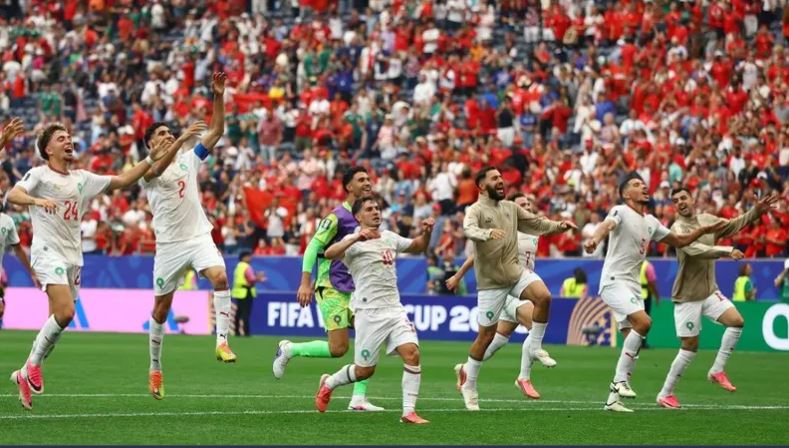
In the Round of 16, Canada stood in Morocco’s way, with the tournament co-host carrying momentum and home support into the last 16. But the Atlas Lions were ready to roar again, producing a superb second-half display to sweep the Canadians aside 3-0 and book a spot in the quarter-finals for the second successive time. Morocco’s supporters have already lived through one unforgettable World Cup journey; another now feels well within reach.
Egypt’s major breakthrough
Egypt’s story is very different. For decades, the Pharaohs have been one of the great contradictions of international football. No African nation has won the Africa Cup of Nations more often, and few countries on the continent can match Egypt’s football heritage. This is a nation of seven AFCON titles, legendary players and enormous domestic expectation.
Yet the World Cup has rarely offered Egypt the same rewards. Its history at the tournament stretches back to 1934, when it became the first African team to play at a World Cup. But for all that tradition, Egypt had never previously won a match on the game’s biggest stage.
That changed against New Zealand as Egypt claimed a 3-1 victory that it had been waiting 92 years for. A second antipodean opponent awaited in the Round of 32 and the Pharaohs managed to do it again. Emam Ashour’s first-half header gave Egypt the lead before Mohamed Hany’s own goal brought Australia level, and the tie eventually moved into the brutal lottery of penalties.
Egypt was flawless from the spot. Mahmoud Saber converted first, Ramy Rabia followed and then Mohamed Salah clipped his penalty down the middle – a Panenka in the most high-pressured of moments. Hossam Abdelmaguid then scored the decisive fourth kick, sending Egypt into the Round of 16 and completing a victory that will stand as the most significant in the country’s football history.
For Salah, it felt like a defining World Cup occasion. He has won club football’s biggest prizes, broken records in Europe and become a sporting icon, but Egypt’s World Cup history had remained painfully thin. Salah – arguably the Arab world’s biggest football star – is finally driving his side forward on the global stage.
Coach Hossam Hassan was one of the great figures in Egyptian football as a player and has brought even greater success as a coach – leading his nation into uncharted territory. The next challenge could hardly be bigger. Argentina awaits in the Round of 16, with Lionel Messi and the defending champions having survived a scare of their own against Cape Verde.
Whatever happens next, Egypt has altered the shape of their World Cup history. This team has gone further than any Pharaohs side before it, in a way that may change expectations for future generations.
Together, Morocco and Egypt now represent the final Arab interest in a tournament that began with unprecedented regional participation. Their paths have been different, but Arab hopes rest with two teams chasing very different versions of history.