
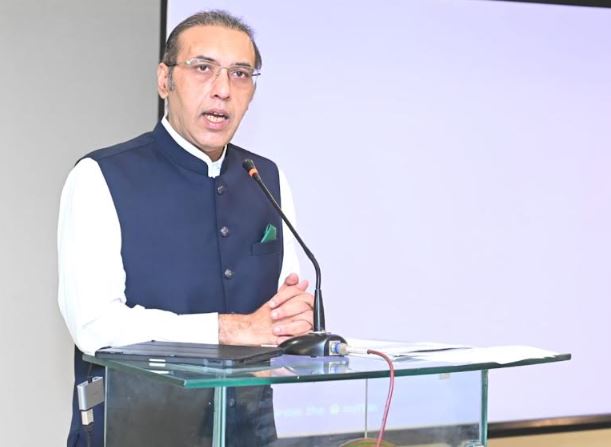
RAWALPINDI, AUG 23 /DNA/ – President Rawalpindi Chamber of Commerce and Industry (RCCI) Usman Shaukat has said that the debate on new provinces and administrative units should not be viewed primarily through a political lens, but approached from an economic, administrative and development perspective.
Talking to a private television channel, he said the central question should be how Pakistan can address deprivation, ensure equitable resource allocation, improve governance and create economic opportunities for its people.
“Pakistan needs a governance system that brings the state closer to the citizen, resources closer to the communities that need them, and economic opportunities closer to its people,” he said.
Usman Shaukat noted that Pakistan’s population has increased dramatically, while disparities in infrastructure, employment, education, healthcare and public services remain a serious concern. The real issue, he said, is not simply the number of provinces, but whether the existing governance structure is delivering fair access to resources and opportunities across all regions.
He stressed that if certain areas have remained deprived for decades, there must be a serious review of resource distribution, development allocations, fiscal transfers and decision-making authority so that less-developed regions receive the investment needed to catch up.
The debate, he said, should examine the “economic cost of deprivation versus the cost of administrative restructuring.” Policymakers must assess how much economic potential is being lost because underserved regions lack adequate infrastructure, connectivity, utilities, education, healthcare and access to government institutions.
He added that creating new provinces under the existing governance model may not automatically resolve these challenges. Strong, empowered and adequately resourced local governments could also bring decision-making closer to citizens and improve service delivery. New provinces and empowered local governments, he stressed, should not necessarily be viewed as mutually exclusive options.
“The objective should be to design a governance model that genuinely devolves political, administrative and financial authority and ensures that resources reach the communities where they are needed most,” he said.
The RCCI President emphasized that the discussion should move beyond talk shows and political slogans and be taken to Parliament, Senate, provincial assemblies and relevant stakeholder forums, supported by economic studies, fiscal analysis, demographic data and public consultation.
The business community, he added, needs policy certainty, efficient administration, predictable taxation, reliable infrastructure, energy and connectivity to promote investment, exports and job creation.
“If new provinces can demonstrably reduce deprivation, improve resource distribution, strengthen governance and unlock economic potential, they deserve serious consideration. If empowered local governments and better fiscal distribution can achieve these objectives without excessive administrative costs, that option must also be examined.”