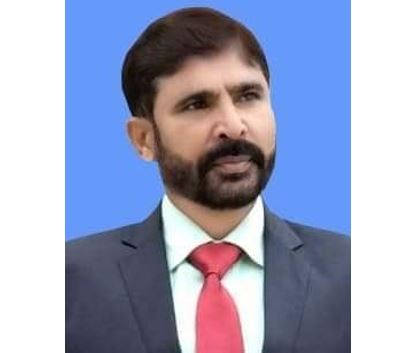
Dr. Muhammad Akram Zaheer
The possibility of ending American military assistance to Israel, once considered politically unthinkable in Washington, is now being discussed openly by both governments. President Donald Trump has indicated that the annual financial support will come to an end in December, bringing forward a debate that has continued for more than three decades. The question, however, is not simply whether the United States should stop funding Israel’s military. It is whether both countries are prepared for the political, military and economic consequences of ending a relationship that has become a central feature of their strategic partnership. Speaking on Fox & Friends on Tuesday, Trump said that he and Israeli Prime Minister Benjamin Netanyahu had agreed to end the annual assistance of approximately $4 billion. He added that Washington would no longer make payments to Israel by the end of the year, although it would continue to help if necessary. According to Trump, Netanyahu himself had raised the matter.
The announcement has created uncertainty because the existing agreement between the two countries extends until September 2028. Signed in 2016, the ten-year memorandum of understanding provides Israel with $3.3 billion annually in Foreign Military Financing and another $500 million for missile defence. The assistance is subject to congressional appropriations, meaning that the president cannot simply disregard the existing arrangements without involving Congress. The Associated Press has described such an abrupt change as extremely difficult, while Politico has pointed out that lawmakers would probably have to consider the matter. An official from Israel’s Finance Ministry also acknowledged that the government knew of the intention to end American assistance but was surprised by the proposed timetable. The remaining two years of the agreement reportedly involve around $8 billion in military equipment, including F-35 and F-15 aircraft, helicopters and missile interceptors.
The political reaction in Israel reflects the importance of the issue. Gadi Eisenkot, who leads the political opposition bloc against Netanyahu, has questioned the prime minister’s credibility and called for his replacement. Meanwhile, Matt Brooks of the Republican Jewish Coalition described the proposed termination as neither unexpected nor uncoordinated, suggesting that discussions had taken place between the two governments. Yet the debate over American assistance to Israel did not begin with Trump. It has a history stretching back more than three decades. In 1995, the Middle East Quarterly published a debate under the title End American Aid to Israel? Joel Bainerman argued that foreign assistance had become a form of welfare that weakened rather than strengthened national independence. Other contributors, including Raphael Danziger and Bradley Gordon of the American Israel Public Affairs Committee, defended the existing arrangement.
In July 1996, Netanyahu himself addressed a joint meeting of the US Congress and declared that Israel had reached the end of its childhood. He announced that his government would begin gradually reducing its dependence on American economic assistance. The argument was straightforward: a country that had developed a strong economy and an advanced industrial base should increasingly finance its own requirements. In 1997, Mitchell Bard and Daniel Pipes made a similar case, arguing that Israel had become an affluent country and that its relationship with Washington was unlike ordinary foreign aid arrangements. The following year, Israeli Finance Minister Yaakov Ne’eman presented a proposal to Congress to reduce economic assistance by $120 million annually over ten years while increasing military assistance by half that amount. The US appropriations bills for 1999, 2000 and 2001 reflected this arrangement.
However, the reduction in economic assistance did not lead to a corresponding decline in military support. Instead, military cooperation expanded. The 2007 memorandum committed Washington to providing $30 billion over ten years. The 2016 agreement increased the amount to $38 billion. It also included provisions requiring Israel gradually to reduce its use of American military financing for purchases from its own domestic defence industry, with that arrangement due to end in 2028. The argument for reducing dependence has gained further support from Netanyahu in recent years. In December last year, he announced plans to allocate 350 billion shekels over a decade to develop an independent Israeli weapons industry. Speaking on 60 Minutes in May, he expressed his desire to bring American financial assistance down to zero rather than leave the decision to a future Congress. US Secretary of State Marco Rubio also told House appropriators in June that Israel wanted to reduce assistance gradually until it reached zero.
These statements suggest that the idea of ending American military grants is not necessarily a rupture in the alliance. It may instead represent an attempt to redefine it. Israel has developed considerable military, technological and industrial capabilities. Its defence industry produces advanced aircraft systems, drones, missile technology and other sophisticated equipment. It is therefore reasonable to ask whether a country with such resources should continue receiving billions of dollars in annual military assistance. Nevertheless, the political obstacles remain substantial. On July 15, the US House of Representatives rejected an amendment introduced by Republican Congressman Thomas Massie to remove the $3.3 billion military financing provision. The proposal was defeated by 314 votes to 104, although 103 Democrats supported it. House Democratic leader Hakeem Jeffries had already indicated opposition to the assistance and argued that Israel was capable of purchasing its own sophisticated weapons.
The disagreement is not limited to Washington. Reports in the Israeli press suggest that the two governments have discussed a substantial reduction rather than an immediate termination. One reported obstacle concerns American demands for greater control over Israeli military technology. There are also questions about how Israel would manage its defence budget if the existing financial arrangement ended before alternative funding mechanisms were established. Israeli financial reporting has pointed to a possible shortfall running into tens of billions of shekels. This is where the real challenge lies. Ending military assistance without preparing an alternative arrangement could create difficulties for both countries. Israel would need to ensure that its defence procurement, missile defence programmes and military readiness remain unaffected. The United States, meanwhile, would have to decide how to maintain strategic cooperation without relying on the existing financial framework.
Washington and Tel Aviv should therefore distinguish between military assistance and the broader strategic alliance. Ending direct grants does not necessarily require ending intelligence cooperation, joint research, military coordination or diplomatic engagement. These arrangements can continue through a revised framework based on shared interests rather than annual financial transfers. For Israel, the transition could strengthen domestic defence production and reduce the perception that its security depends on American taxpayers. For the United States, it could provide an opportunity to reconsider a long-standing financial commitment while maintaining its influence in the Middle East.
The danger is not necessarily the termination of assistance but the absence of a carefully negotiated transition. Three decades of discussion have established that the relationship needs to evolve. Trump’s announcement has now placed a deadline on that debate. Whether the two governments can turn it into a workable agreement will determine if the end of American military grants becomes a step towards greater Israeli independence or another source of uncertainty in an already unsettled region.
Dr. Muhammad Akram Zaheer
Assistant Professor Pakistan Studies
Imperial College of Business Studies Lahore