ISLAMABAD, 06 APR (DNA) — As China and Pakistan mark the 75th anniversary of the establishment of diplomatic relations, the cultural and artistic partnership between the two nations has evolved from steady exchanges into a dynamic and multifaceted collaboration, according to Muhammad Ayoub Jamali, Director General of the Pakistan National Council of the Arts (PNCA).
The Pakistan National Council of the Arts (PNCA) is the country’s premier national arts institution. Established in 1973, it maintains active partnerships with regional art councils across all provinces, China Economic Net reported on Monday. From visual arts and classical music to puppetry, theatre, and cultural diplomacy, PNCA enables artistic growth through exhibitions, education, residencies, publications, and public events.
In an exclusive interview to CEN, Mr. Ayoub Jamali reflected on the deepening ties between the two countries’ artistic communities and outlined his vision for future cooperation. “From the coasts of Balochistan to the mountains of Gilgit-Baltistan, our artists, musicians, filmmakers, writers, designers, and performers step into the spotlight and take pride in their craft,” the Director General said. By working with China, they can gain access to a bigger stage.
A landmark development in bilateral cultural cooperation came in May 2016, when the China Cultural Center signed a venue lease agreement with the PNCA and officially settled within the PNCA complex in Islamabad. The PNCA complex, which houses 14 modern exhibition halls of varying sizes and a theater capable of seating 500 spectators, became the permanent home of the China Cultural Center — a physical co-location that has enabled regular programming exchanges ever since.
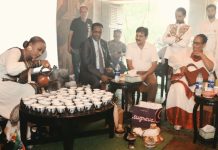
“This physical co-location has transformed our cooperation,” Mr. Ayoub Jamali said. “We have carried out many joint programming initiatives and cultural exchanges, including the mutual dispatch of performing troupes.” These activities include art exhibitions, children’s painting competitions, and programs for Pakistani students from schools and universities who want to learn the Chinese language and extend their artistic understanding.
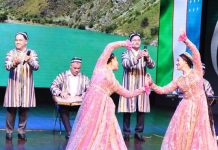
Over the past decade, PNCA has engaged in a wide range of collaborative initiatives with Chinese institutions. Notable examples include the PNCA dance troupe’s participation in the 5th China Xinjiang International Ethnic Dance Festival in 2017, the 2022 China-Pakistan Folk Music Concert, which brought together traditional musicians from both countries, and the 2023 Sino-Pak feature film “Ba Tie Girl”, a co-production screened at PNCA that showcased cross-cultural storytelling through cinema.
To mark the 75th anniversary, two major China-Pakistan friendship art exhibitions have already been held at PNCA this year, with more exhibitions and artistic exchanges planned for May and beyond. Looking further ahead, the Director General revealed plans for visits to China involving Pakistani officials and artists to exchange experiences and expertise in the visual arts.
He also extended warm invitations to Chinese artists and institutions, highlighting the potential for technology transfer and skills development. China’s achievements in the arts-driven creative industries provide a compelling model for such collaboration. In 2025, the country’s cultural and artistic sectors have demonstrated remarkable strength.
The combined operating revenue of major cultural enterprises nationwide reached 15.21 trillion yuan, marking a 7.4 percent year-on-year increase. Among these, the cultural services sector reached 8.58 trillion yuan, up 12.0 percent from the previous year, underscoring the growing role of arts and creative services in the national economy.
The craft industry, Mr. Ayoub Jamali stressed, plays a vital role in the creative economy. “Pakistani artists working in craftsmanship have a place to grow, and the PNCA is building them a proper platform.” he said. “We have set up stores, workplaces, and souvenir shops across our museum network, featuring traditional Pakistani artwork such as truck art, ceramics, glasswork, and other pieces by local artists.”
By drawing on China’s experience in transforming traditional art forms into sustainable creative enterprises, Pakistani artisans and visual artists stand to gain a new pathway to economic empowerment and international recognition. — DNA