By Abdul Samad Tariq
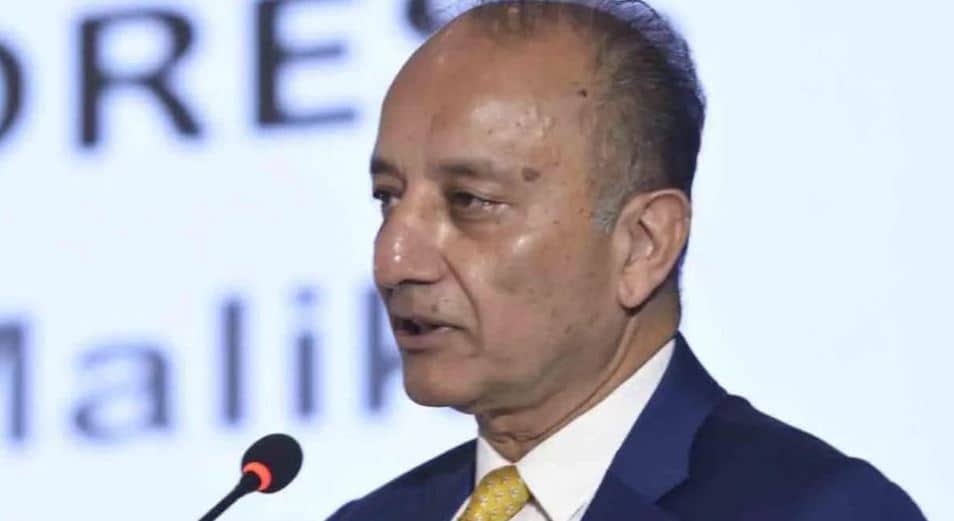
ISLAMABAD, May 06: Federal Minister for Climate Change and Environmental Coordination Dr. Musadik Malik on Wednesday said the government would empower youth-led climate innovation through a proposed “Green University” initiative and international research collaborations aimed at transforming Pakistan’s climate challenges into opportunities for technological and economic progress.
Addressing the inaugural session of the Breathe Pakistan International Climate Change Conference here, the minister floated the idea of a “Green University” for conducting applied and commercial climate research in collaboration with Italian experts and academic institutions.
Referring to recent discussions with Italian officials, he said Pakistani and Italian students would jointly conduct research projects under the initiative while internationally renowned professors, including Nobel laureates, would supervise the work.
“It was a rolling conversation in Italy that I had just a few months ago, and now we are putting together a framework,” he said.
The minister said Pakistan’s young population possessed the imagination, scientific understanding and determination needed to develop climate solutions, stressing that the government was committed to providing them with resources, platforms and institutional support.
Dr. Malik noted that about two-thirds of Pakistan’s population comprised youth and lauded the quality education being provided by several universities across the country.
“Our young people have ideas, technology, science and passion. Most importantly, there are still stars in their eyes and they still believe the world can be changed,” he said.
He said students graduating from institutions including GIK, LUMS and other leading universities had strong ideas and innovative thinking, but often lacked opportunities and pathways to implement them.
“We have to give them that pathway,” he added.
The minister announced that the government would organize quarterly competitions to support students and young innovators working on climate-related technologies, applied science and sustainability solutions.
According to him, young researchers and entrepreneurs would receive funding to pursue ideas that could help address challenges related to water, environment, clean energy and climate resilience.
“It is their air. They are breathing; they will find the solution,” he remarked while referring to the younger generation’s ability to tackle environmental challenges.
Encouraging experimentation and innovation, the minister said young people should be allowed to take risks without fear of failure.
The minister said the government was also working on a “Greenfield Pakistan Pitch” initiative to connect innovative climate ideas with investment opportunities and commercial support.
He said Pakistan’s climate-related challenges could become the foundation for globally relevant solutions.
“The child who solves Pakistan’s water problem can solve Africa’s water problem too,” he remarked, adding that billion-dollar ideas could emerge from Pakistani youth.
Highlighting the unequal global impact of climate change, Dr. Malik said Pakistan contributed less than one percent to global carbon dioxide emissions despite being among the countries most severely affected by floods, environmental degradation and worsening air quality.
Speaking on the impact of air pollution on life expectancy, he referred to studies suggesting that polluted air could reduce average life spans by several years.
The minister said around 10 countries were responsible for nearly 78 percent of global emissions, while communities in areas such as Gilgit-Baltistan continued to suffer the consequences despite contributing almost nothing to the problem.
“Those suffering are not causing it, and those causing it are not suffering,” he said.
Questioning the global response to climate change, Dr. Malik asked whether the issue was one of “rights, justice or political will.”
The minister said climate change was not only a question of environmental policy but also one of imagination, responsibility and commitment toward future generations.
“We are doing this for our own children,” he added.