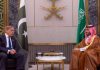
The Middle East and South Asia are caught in a volatile “Great Game” where energy dominance and sectarian tensions fuel regional power struggles. Pakistan’s stuck between a rock and a hard place, balancing its relationships with Saudi Arabia, Iran, and the US while navigating its own internal security and economic challenges.
The global shift towards a multipolar order has created a power vacuum, with regional players like Turkey, Saudi Arabia, and Qatar filling the gap. This chaos is reminiscent of Robert Gilpin’s “hegemonic stability theory,” where the decline of a dominant power invites instability.
Pakistan’s trying to adapt, leveraging its strategic location and nuclear status to maintain autonomy between China and the West. However, domestic volatility and regional proxy wars pose significant challenges.
The Arab Spring’s aftermath has created ungoverned spaces, forcing Pakistan into transactional alliances with Middle Eastern powers. This “strategic straitjacket” requires careful balancing to avoid getting consumed by regional conflicts.
The region’s instability has a direct impact on Pakistan, with radicalization and terrorism threatening its internal security and economy. A unified governance structure is needed to avert total collapse.
On a more positive note, there’s a growing trend towards economic interdependence and regional cooperation. Pakistan’s shifting its focus to economic security, with initiatives like CPEC 2.0 aiming to integrate the region and promote shared prosperity.
By becoming a geo-economic hub, Pakistan hopes to secure a “perpetual peace” through indigenous solidarity and cooperation. TIME WILL TELL IF THIS APPROACH PAYS OFF.
Noor-Ul-Huda Haseeb