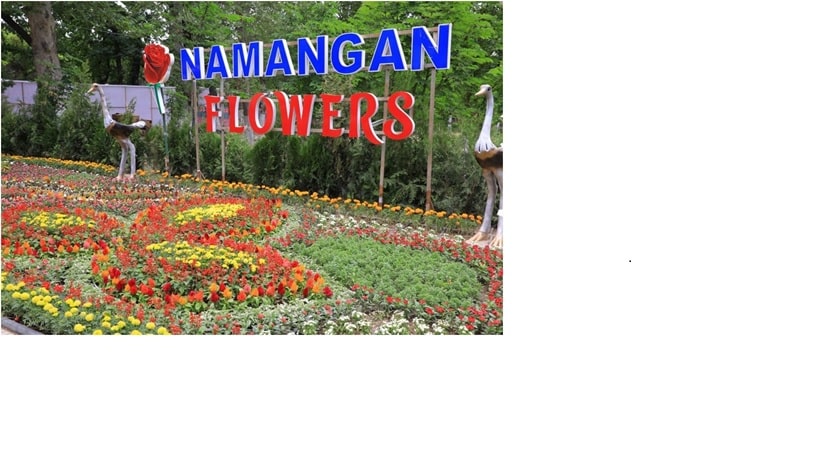
Namangan is one of Uzbekistan’s regions with a rich centuries-old history. The area has been continuously inhabited for more than two thousand years. The Namangan region was established as an administrative unit in 1941. Today, its population exceeds three million people. The area covers 7,900 km², and its administrative centre is the city of Namangan. The city is located at an altitude of about 450 metres above sea level.
Namangan is one of the most densely populated regions of Uzbekistan. As a result, public life is highly active, and economic, cultural, and educational processes are developing dynamically. The annual International Flower Festival is especially well known.
The Flower Festival was first held in Namangan in August 1961 as a flower exhibition. In 2018, it received international status, and since then it has attracted participants and guests from various countries. Today, it has become one of Uzbekistan’s largest international cultural celebrations.
This year marks the 65th anniversary edition of the festival. Over the years, the event has gained recognition not only in the country but also internationally.
The festival attracts significant interest not only from residents of Uzbekistan but also from neighbouring countries, as well as international experts and specialists. Preparations for the event are currently in full swing.
According to organisers, around 1 million foreign tourists from more than 50 countries and over 7 million local visitors are expected this year. The 50-day festival will include more than 150 cultural, educational, and entertainment events.
A key feature of this year’s festival may be its inclusion in the Guinness World Records. A process is currently underway to set a record for the largest-scale flower planting within a month. The process is being monitored for transparency by a representative of the organization in the UAE, Kanzy Defrawy, in accordance with international standards.
The festival will run from 24 May to 12 July. Its programme includes gala concerts, drone shows, car parades, open-air symphony concerts, fashion weeks, exhibitions, and international forums on tourism, investment, and business.
As part of the preparations, around 5 million seasonal flowers have been planted across the city and districts, giving the region a bright and festive appearance.
The opening ceremony will take place on 24 May at Babur Park in Namangan. On this day, a flower-decorated car parade will be held through the city streets, and in the evening a concert featuring local and international artists will take place at the amphitheatre of the “New Uzbekistan” Park.
Throughout the festival, daily programmes will include theatre performances, puppet shows for children, handicraft fairs, workshops, and regular concerts in parks.
In late May and early June, several major events are planned, including a symphony concert, a retro music evening, “Fashion Days” shows, a lavender festival, and a concert by Yulduz Usmonova. A drone show is also scheduled for 1 June.
Sports enthusiasts will be able to enjoy wrestling competitions, motocross events, international tournaments, and ethnosport games.
The festival will also host international conferences on biodiversity, artificial intelligence, tourism, and economics, highlighting its scientific significance.
In addition, gastronomic festivals, youth environmental campaigns, competitions, and special programmes for children are planned.
The festival will conclude on 12 July with a closing and award ceremony at the “New Uzbekistan” Park.
In summary, the International Flower Festival in Namangan is not only a celebration of flowers but also a large-scale international event that combines culture, art, sport, and science.