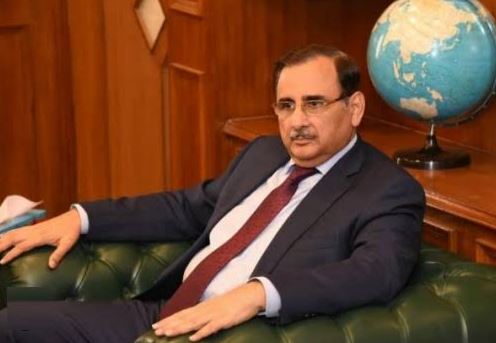
Anjum Nisar says excessive taxation and policy uncertainty are damaging business confidence
ISLAMABAD, MAY 10: /DNA/ – The Federation of Pakistan Chambers of Commerce and Industry’s (FPCCI) Businessmen Panel (BMP) has strongly criticised the government’s reported plan to introduce new taxation measures under the upcoming IMF-linked federal budget, warning that additional fiscal burden on businesses, traders and salaried segments could further weaken economic activity and slow industrial growth across the country.
In a detailed statement, FPCCI President and BMP Chairman Mian Anjum Nisar expressed serious concern over reports that the government is preparing to impose around Rs230 billion in net additional taxes while pursuing a fiscally tight budget under IMF conditions for the next financial year.
He said that Pakistan’s business community is already facing unprecedented economic challenges, including high electricity and gas tariffs, expensive financing, currency instability, declining consumer purchasing power and uncertainty in economic policymaking. Under such circumstances, imposing further taxes could severely damage investor confidence and discourage economic expansion.
“The country’s economy cannot achieve sustainable growth through continuous taxation and excessive dependence on revenue-generation measures. Businesses need relief, stability and confidence-building policies to expand operations, create jobs and contribute positively to the national economy,” said Mian Anjum Nisar.
He stated that while economic stability and engagement with international financial institutions remain important, Pakistan must adopt balanced policies that protect domestic industries, encourage entrepreneurship and support productive sectors instead of placing repeated pressure on the documented economy.
The FPCCI BMP chairman criticised the continued reliance on indirect taxation and revenue targets without implementing structural reforms aimed at improving governance, reducing public-sector inefficiencies and expanding economic activity.
According to him, industries and traders have consistently raised concerns over rising operational costs, shrinking profit margins and declining competitiveness in both local and international markets. He warned that additional taxation without corresponding reforms and incentives would further increase financial stress on businesses already struggling to survive in difficult market conditions.
“Instead of repeatedly burdening the formal sector, the government should focus on expanding the tax net through practical documentation measures, digitalisation and economic growth. The same taxpayers and industries cannot continue carrying the entire national revenue burden,” he remarked.
Mian Anjum Nisar also expressed reservations over the proposed new tax scheme for traders, under which a one percent tax based on annual turnover may reportedly be introduced. He said the business community supports fair taxation and documentation, but policies must remain simple, transparent and realistic to ensure wider compliance and economic continuity.
He emphasised that small and medium enterprises (SMEs), which form the backbone of Pakistan’s economy, require facilitation rather than additional financial pressure. He said SMEs are already dealing with inflation, rising import costs and limited access to affordable financing, making survival increasingly difficult for many entrepreneurs.
The BMP chairman urged the government to announce a business-friendly and growth-oriented federal budget that prioritises industrial revival, export enhancement, employment generation and private-sector development.
He called for immediate reduction in electricity and gas prices for industries, rationalisation of fuel costs and lower taxation on productive sectors to improve Pakistan’s competitiveness in global markets. He further demanded gradual reduction in corporate tax rates and withdrawal of unnecessary levies that negatively impact investment decisions.
“Economic recovery requires strong industrial growth, stable policies and investment-friendly reforms. Without supporting industries and businesses, the government cannot achieve sustainable revenue growth or long-term economic stability,” he said.
Mian Anjum Nisar also urged policymakers to restore investor confidence by ensuring consistency in economic decisions and avoiding abrupt policy changes that create uncertainty in markets.
He noted that many investors are delaying expansion plans due to unpredictable taxation policies, import restrictions and inconsistent regulatory frameworks. According to him, economic planning should involve meaningful consultation with chambers of commerce, trade bodies and industrial stakeholders before major policy decisions are finalised.
The BMP further stressed the need to promote export-oriented industries and emerging sectors such as information technology, freelancing, digital services and e-commerce. He said Pakistan has enormous potential in these sectors, but businesses require incentives, infrastructure and easier regulatory procedures to compete internationally.
“Pakistan’s young population represents a major economic strength. The government must support innovation, technology, entrepreneurship and skill development so that the country can benefit from global opportunities in digital trade and modern industries,” he added.
The business leader also criticised the increasing cost of borrowing for the private sector and demanded easier access to financing for SMEs, exporters and manufacturers. He said affordable credit facilities are essential for industrial expansion, modernisation and employment generation.
Mian Anjum Nisar further urged the government to reduce unnecessary public expenditure, improve efficiency in state institutions and focus on long-term reforms instead of relying mainly on taxation measures to meet fiscal targets.
He said Pakistan’s economy requires sustainable policy direction based on productivity, industrialisation and export growth rather than temporary revenue measures that place additional burden on already compliant taxpayers.
“The private sector should be treated as a partner in economic development, not merely as a source of taxation. Businesses generate jobs, exports, investment and economic activity, and they must be supported through practical and business-friendly policies,” he maintained.