
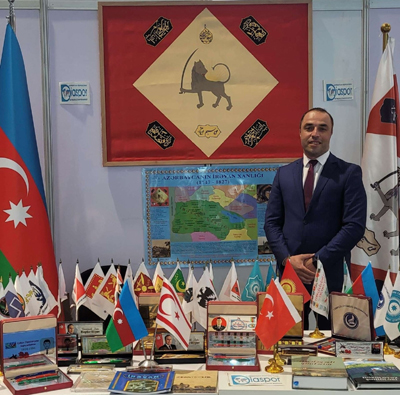
The majority of the international community recognizes this territory simply as the “Republic of Armenia.” However, Azerbaijani society, historians, and internally displaced communities assess these lands from a fundamentally different perspective. A significant part of present-day Armenia is considered historically inhabited, governed, and culturally developed by Azerbaijanis over centuries. The term “Western Azerbaijan” is used to describe these territories — geographically referring to the historical Azerbaijani homeland located west of the Republic of Azerbaijan. Azerbaijanis living in these areas were subjected to gradual demographic pressure beginning in 1828, Soviet deportations during 1948–1953, and ethnic violence during 1988–1991, resulting in their expulsion from their ancestral lands. The international importance of this issue lies in the fact that it concerns not only Azerbaijan–Armenia bilateral relations but also universal principles such as minority rights, the right of return for displaced populations, protection of cultural heritage, and historical justice. Without recognition of this truth, the establishment of a fair and sustainable peace in the region is impossible. To properly understand the Western Azerbaijan issue, the historical timeline must begin in 1828. This date marks the Treaty of Turkmenchay between the Russian Empire and Qajar Iran, a geopolitical turning point that reshaped the entire South Caucasus. Before the Treaty of Turkmenchay, the territory of present-day Armenia was largely governed as Azerbaijani khanates. The Erivan and Nakhchivan Khanates constituted the main political entities of this region. The Erivan Khanate, formed after the death of Nadir Shah in 1747, functioned as an independent state ruled by Azerbaijani Turkic dynasties. Its capital, Erivan (modern-day Yerevan), was a vibrant Azerbaijani city with fortresses, palaces, mosques, and bazaars. After the Russian occupation, a policy of demographic engineering was implemented. Under General Paskevich, large-scale resettlement of Armenians from Iran and Ottoman territories into the region was carried out. Between 1828 and 1830 alone, more than 40,000 Armenians from Qajar Iran and over 84,000 from the Ottoman Empire were relocated to these areas, according to Russian archival sources. At the same time, the Muslim Azerbaijani population was gradually marginalized and dispossessed. Nevertheless, until the early 20th century, Azerbaijanis made up approximately 40% of the population of the Erivan Governorate. This was not a small minority; nearly half of the population consisted of Azerbaijani Turks. Their villages, lands, religious sites, mosques, and cemeteries covered the entire region. The beginning of the 20th century marked a period of bloody ethnic clashes in the South Caucasus. In 1905, revolutionary waves in the Russian Empire escalated into armed conflicts between Azerbaijanis and Armenians in Baku, Erivan, and Ganja. These events resulted in civilian casualties on both sides, but the process of Azerbaijani displacement from their historical lands accelerated. More severe events occurred between 1918 and 1920. Following the collapse of the Russian Empire, three republics were declared in the South Caucasus: the Azerbaijan Democratic Republic, the Republic of Armenia, and the Georgian Democratic Republic. Territorial disputes immediately began between them. Erivan province, Zangezur, Karabakh, and Nakhchivan became central points of conflict. During this period, Armenian forces led by Andranik Ozanian systematically burned Azerbaijani villages in Zangezur, Vedi, and Sharur and massacred civilians. These events are referred to in Azerbaijani historiography as “Dashnak massacres.” Thousands of Azerbaijanis were killed and hundreds of villages destroyed. At the same time, in March 1918 in Baku, the so-called “March massacres” took place, during which tens of thousands of Azerbaijanis were killed by the Bolshevik-Dashnak alliance. This historical period laid the foundation for deep mutual distrust and fear between the two peoples. However, the suffering of Azerbaijanis during this period has not been highlighted in international discourse to the same extent as other narratives. In 1920, the Red Army occupied the entire South Caucasus. The Bolsheviks began restructuring the region. Decisions taken during this period defined both political and ethnic balances, the consequences of which are still felt today. In 1921, the Soviet leadership defined the administrative map of the South Caucasus. Nakhchivan was granted autonomous status within the Azerbaijan SSR. Nagorno-Karabakh, despite its predominantly Armenian population, was placed under Azerbaijani jurisdiction. Zangezur district was transferred to the Armenian SSR, separating Nakhchivan from mainland Azerbaijan. At that time, a significant Azerbaijani population still lived in present-day Armenia. Initially, Soviet policy was relatively tolerant. Azerbaijani villages existed within the Armenian SSR administrative system, with Azerbaijani-language schools, collective farms, and local institutions operating. However, over time, Soviet nationalization policies weakened the position of Azerbaijanis in Armenia. Property was nationalized, land was collectivized, and independent cultural and political organization became impossible. One of the least known but most significant chapters of the Western Azerbaijan issue is the systematic deportations carried out under Stalin. In 1947, a special decree of the USSR Council of Ministers ordered the relocation of Azerbaijanis from the Armenian SSR to the Kura-Araz lowlands of the Azerbaijan SSR — including the Mil and Mugan plains. The official justification was the need to create space for Armenians arriving from the diaspora. The Soviet government pursued a policy of encouraging global Armenian diaspora repatriation to Soviet Armenia, and Azerbaijani lands were used for their settlement. Between 1948 and 1953, three major waves of deportations took place. In 1948, 1949, and 1950–1953, tens of thousands of Azerbaijani families were forcibly removed from their homes and transported in freight trains to Azerbaijan SSR. According to Azerbaijani historical estimates, more than 100,000 Azerbaijanis were affected, with some research suggesting even higher numbers. The deportees faced extremely harsh conditions. The Mil plain at that time was marshy, hot, and affected by malaria. People lived in tents and partially constructed shelters. Soviet documents themselves recorded high mortality rates during this period. Many deportees died within a few years due to these conditions. Unlike other Soviet deportations (such as the Chechens, Crimean Tatars, and Volga Germans), this tragedy remains largely absent from international historical awareness. After Stalin’s death, the Khrushchev “Thaw” brought a relatively calmer period for Azerbaijanis in Armenia. However, this calm was artificial; ethnic tensions over land never fully disappeared. During the 1960s and 1970s, Azerbaijanis still constituted a significant population in rural areas of the Armenian SSR, particularly in regions such as Vedi, Zangezur, and surrounding villages of Goris. However, access to higher education and state institutions for Azerbaijanis gradually became more difficult. Ethnic discrimination, while not officially acknowledged, was present in daily life. During this period, Armenian nationalist movements gained strength. Armenian intellectuals began openly discussing the annexation of Nagorno-Karabakh and the return of “historical Armenian lands” from Turkey. Within this discourse, the presence of Azerbaijanis in Armenia was increasingly viewed as a “problem.” In the mid-1980s, Mikhail Gorbachev’s policies of “glasnost” and “perestroika” strengthened nationalist movements across the USSR. In Armenia, territorial claims over Nagorno-Karabakh became openly discussed, and attitudes toward Azerbaijanis increasingly turned hostile. The most dramatic and least known chapter of Western Azerbaijan history took place between 1988 and 1991. During this period, the Azerbaijani population of Armenia was forcibly expelled amid violence, fear, state silence, and international indifference. From the very beginning of the Nagorno-Karabakh conflict in 1988, physical attacks against Azerbaijanis began in Armenia — even before the escalation in Karabakh itself. Azerbaijani families in regions such as Gafan, Sisian, Goris, and Meghri were attacked; homes were burned, people were beaten, and some were killed. In November 1988, violence expanded further, leading to mass displacement. By 1989–1991, the process was completed. By the time Armenia declared independence in 1991, virtually none of the more than 200,000 Azerbaijanis remained. This event fits the definition of ethnic cleansing: systematic violence, lack of state protection, property confiscation, threats of death, and destruction of cultural traces. Another deeply damaging aspect of the Western Azerbaijan issue is the systematic destruction of cultural heritage. This process began before displacement, continued during it, and persists afterward. Mosques built by Azerbaijanis over centuries were destroyed or repurposed. The Blue Mosque in Yerevan, for example, was used as a warehouse during the Soviet period and later as a cinema. It was restored in the 1990s with Iranian funding, but outside the context of Azerbaijani heritage.
Azerbaijani cemeteries were destroyed or erased, with inscriptions removed or stones broken. Place names were systematically changed, replacing Azerbaijani toponyms such as Goycha, Zangibasar, and Vedibasar. This was not merely a linguistic change but an attempt to erase historical connection to the land. Many historical monuments attributed to Azerbaijanis were later reclassified under different ethnic origins, with no reference to their Azerbaijani heritage. Organized under the “Western Azerbaijan Community,” displaced Azerbaijanis and their descendants have increasingly raised the right of return at the international level. This demand is based not on political claims but on universally recognized principles of international law. UN resolutions affirm the right of displaced persons to return to their homes. However, this principle is inconsistently applied. The European Convention on Human Rights also guarantees property rights regardless of ethnicity. The 1951 Refugee Convention protects individuals displaced on ethnic grounds. Azerbaijan insists that this issue be included in comprehensive peace negotiations. However, international mediators in Brussels, Paris, and Washington have tended to avoid placing it on the core agenda. The right of return is not an unrealistic aspiration. It represents concrete legal claims of tens of thousands of people, many of whom or whose descendants still know the exact locations of their ancestral homes. The limited international media coverage of this issue has structural causes. First, strong Armenian diaspora lobbying in Western political systems significantly shapes narrative framing. Second, historical memory of earlier conflicts influences perception patterns, often casting Armenians as victims and Azerbaijanis as aggressors. Third, limitations in media dissemination from Azerbaijan reduce global visibility. Fourth, recent geopolitical developments have reinforced simplified narratives that obscure Azerbaijani displacement history. Since 2022, peace negotiations between Azerbaijan and Armenia have continued under international mediation. However, key issues remain unresolved. Will the right of return for Azerbaijanis be included in formal negotiations? How will property claims, cultural heritage, and religious sites be addressed? Will legal mechanisms be established for the protection and restoration of Azerbaijani heritage in Armenia?
Without answers to these questions, any peace agreement risks remaining incomplete. The Western Azerbaijan Community has become increasingly active in international forums, engaging in legal and diplomatic advocacy. Although tangible results remain limited, the visibility of the issue is gradually increasing. The purpose of this narrative is not to increase hostility, but to highlight a historical reality that remains underrepresented internationally. Both peoples have suffered greatly, and both have victims in their histories. However, the displacement of Azerbaijanis from their ancestral lands is rarely acknowledged in global discourse. This imbalance represents both an intellectual and ethical challenge. International media, academia, and human rights institutions are encouraged to examine and address this gap.
Farid Mustafayev
“Progress” social and economic research public union deputy chairman , Member of the New Azerbaijan Party, Member Of The Western Azerbaijan Community, Board Member Of The Youth Anti-Drug Public Union