He also highlighted ceasefire violations in Lebanon by Israel and the Israeli government’s reported orders for potential strikes in parts of Beirut, describing these actions as destabilizing and contrary to international norms
Fiaz Chaudhry
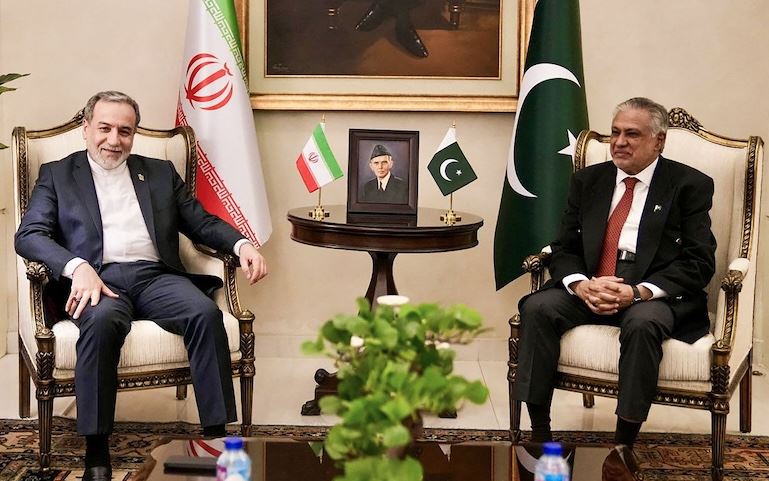
ISLAMABAD, JUN 1 /DNA/ – Iranian Foreign Minister Seyed Abbas Araghchi held a detailed conversation with Pakistan’s Deputy Prime Minister and Foreign Minister Senator Mohammad Ishaq Dar to discuss the rapidly evolving regional situation and matters of mutual concern.
During the call, FM Araghchi expressed deep concern over recent developments, including U.S. violations and attacks on Iranian installations, which he said had pushed Iranian patience “to its limits.” He also highlighted ceasefire violations in Lebanon by Israel and the Israeli government’s reported orders for potential strikes in parts of Beirut, describing these actions as destabilizing and contrary to international norms.
The Iranian Foreign Minister appreciated Pakistan’s constructive role in regional diplomacy, acknowledging Islamabad’s consistent efforts to promote peace and dialogue among neighboring states. He urged Pakistan to continue using its good offices to help facilitate de‑escalation and support efforts aimed at maintaining the fragile ceasefire in Lebanon and preventing further escalation.
In response, Deputy Prime Minister Dar conveyed Pakistan’s serious concern over the deteriorating security environment and emphasized the need for all parties to exercise restraint. He reiterated that sustaining the ceasefire was essential to avoid a breakdown of existing understandings and to preserve regional stability.
Both leaders agreed to remain in close contact and coordinate diplomatic efforts to prevent further deterioration of the situation. The discussion underscored the shared commitment of Pakistan and Iran to peace, dialogue, and mutual respect in addressing regional challenges.
Observers note that the exchange comes at a critical time, as tensions continue to rise across the Middle East following repeated violations of ceasefire agreements and increased military activity. The conversation between the two foreign ministers reflects Islamabad’s ongoing engagement with Tehran and its broader role in promoting regional peace and stability through diplomacy.