
By: Zaid Bin Shakir
My parents never let me go on school trips—they believe the outside world is far too cunning. Yet here I was, my head glued to a window in the backseat of a bus, en route to Shadipur Sonargaon, a remote village on the outskirts of Dhaka last month.
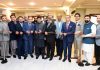
During the days, I sat in a hall filled with 1300 other delegates from more than 30 countries, all attending the premiere event of the Yunus Centre, a global hub for social business. At night, I wandered the streets of Dhaka, staring at the towering skyscrapers and haggling with tuk-tuk drivers. I was in Bangladesh for Social Business Day.
But really, I was there for its pioneer, Professor Muhammad Yunus, who questioned the conventional theories of economics and created a paradigm shift. In 1976, Yunus noticed that impoverished bamboo weavers in the village of Jobra were trapped in debt cycles because traditional banks deemed them uncreditworthy.
Refusing to surrender to hopelessness, he lent $27 out of his own pocket to forty-two of these women. The only collateral was trust, and it worked. The artisans were able to trade fairly, and repaid him in full. This sparked the birth of microcredit and Grameen Bank, for which he was awarded the Nobel Peace Prize in 2006. Today, that experiment has evolved into a vast network of 10.62 million borrowers across 81,000 villages, and a global philosophy called Social Business: a non-dividend company created specifically to solve a social or environmental problem.
The conference hall with hundreds of global attendees reflected the sheer scale of his impact. Back home in Lahore, I’ve observed only two extremes: a typical profit-maximizing business – think every brand on MM Alam Road, where the elite consumers shop luxuries that are unfathomable to the pocket of a common man – or a welfare charity like Data Darbar, where endless queues of the needy seek basic sustenance.
But listening to the delegates, I realized the two incentives could coexist. Dr.Yunus overcame this conflict and reconciled it beautifully. He acknowledged the human urge to create wealth not as greed, but as a prerequisite: “to spread wealth, we need to have wealth”. Only once we build the means for ourselves can we sustainably empower others. As the conference progressed, his praises felt routine to my ears.
The initial infatuation started to wear off. It began feeling monotonous. With my head still glued to the window, I was too spaced out to remember when the landscape turned from a stretch of towering skyscrapers in Dhaka to endless green fields and muddy roads. “We are here!” The door hissed open, and the dust settled over a village in Shadipur Sonargaon, one that looked eerily similar to my own hometown Rasoolpur Tarar back in Pakistan. The hospitality won us over instantly when the locals treated us to sweet mangoes and ripe bananas. As our tour guide began explaining the mechanics of Grameen bank, my understanding of economics and finance was upended yet again. Textbooks taught me that banking relies on rigid collateral and legal threats, marginalizing the poor to protect the wealthy. Yet here was an institution operating entirely on trust, lending to over ten million rural borrowers, 97% of whom are women, while still maintaining a staggering 96% repayment rate! The guide explained that instead of legal threats, people borrowed in groups, leaning on each other for accountability.
All you need is a basic ID card. After lunch, we walked into the heart of the village. Everywhere I looked, the village hummed with purpose: kids rushing to school, women drying rice with their bare feet, men raising livestock, and families hunched over looms. None of them seemed lost or desperate for sympathy. Under a small wooden hut, we met a group of local businesswomen. I talked to their leader, Poribano.
Surviving the catastrophic 1988 floods, Poribano used an initial 3,000 Taka loan for a cow to eventually build 280,000 Taka in landholdings. Beside her stood Maya, a radiant artisan who wove Jamdani sarees with her husband in a small cottage. Standing before their looms, witnessing the art of weaving sarees, I realized Grameen Bank had done something far beyond financing enterprises: it gave them unquantifiable agency, dignity, and pride.
On the ride back, I tried to process the scale of what I had just witnessed. All the praise during the conference now felt like a mere drop in the ocean; this was just one village, one branch among thousands. I couldn’t help but smile in awe, silently apologizing to Dr. Yunus for doubting the hype back in the conference hall.
I kept drawing parallels to Pakistan. Our villages are just as teeming with entrepreneurial spirit, with women like Poribano and Maya desperately waiting for the support to build their lives. Before landing in Dhaka, I knew the Bangladeshi economy had surpassed ours in several indicators, including GDP per capita. Naturally, I expected to see superior infrastructure and a visibly higher quality of life. But looking out the window, I saw a reflection of myself. Dhaka felt familiar: the same traffic, the same contrast of G-Wagons passing the homeless on sidewalks, looking just like Lahore apart from a denser concentration of skyscrapers.
So? What was different? This experience forced me to rethink what higher GDP actually represents. Bangladesh’s superior numbers didn’t translate into flashier highways or richer citizens because economic growth isn’t just about visible industrial output, it is about accounting for what already exists. By bringing millions of women into a documented financial system, Dr. Yunus turned their everyday struggles into measurable contributions reflected in his country’s books.
Pakistan may not actually lag behind in raw output or entrepreneurial drive, but it sure does fail to formalize the efforts of countless workers like Poribano and Maya. Perhaps the biggest lesson is this: before chasing grand new trade deals or megaprojects, our greatest economic potential lies in accounting for the invisible hands already sustaining our communities. I agree with my parents. The world sure is cunning, but after seeing those proud smiles, I am no longer afraid to face it. Instead, a quiet, exciting rebellion has started to make my heart race.
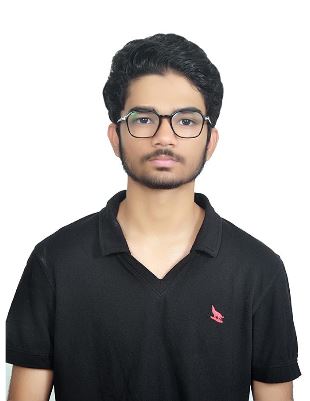
Zaid Bin Shakir is a thriving A Level student at The City School, Ravi Campus, Lahore with 09 A*s in O Level and 05 A*S| A in CAIE A1 2026. With majors like Economics, Maths & Further Maths, he is striving to excel in quantitative economics and management.