DNA
SEOUL: South Korean President Lee Jae Myung said on Friday that US President Donald Trump clearly wants dialogue with Pyongyang and confirmed Seoul will not be deploying troops to intervene militarily in the Iran war.
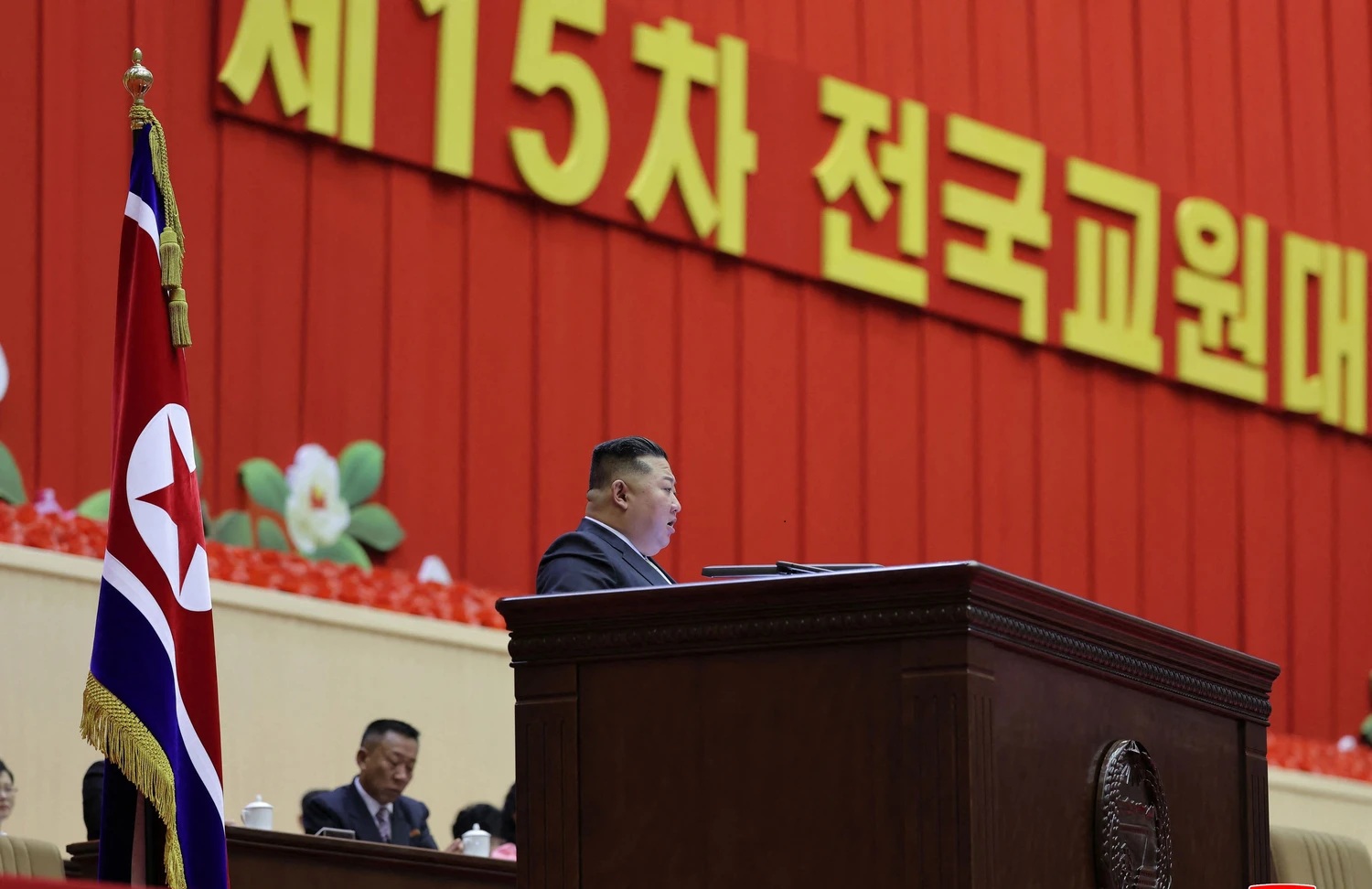
Trump, seeking to revive the bond he claims to have forged with North Korean leader Kim Jong Un in his first term, said last month that he plans to meet Kim later this year.
The US president also said it was important to “get along” with Kim, adding that Pyongyang now had 57 “very powerful” nuclear weapons. Seoul says there are around 80-120.
North Korea, which has secured critical backing from Russia in recent years, did not clearly respond to Trump’s overtures.
Lee said Friday it was “clear” that “Trump wants dialogue, and I am also urging President Trump to engage in dialogue.”
South Korea — which Pyongyang has repeatedly labelled as its enemy — was continuing “preliminary coordination efforts” to facilitate dialogue between North Korea and the United States, Lee told reporters at the presidential Blue House.
He added that such a meeting “remains difficult, but is not impossible.”
“I cannot say for certain how likely it is, but it is also clear that we must make every possible effort to turn that possibility into reality,” he said.
Lee’s comment came hours after the North Korean leader’s powerful sister accused the United States of escalating regional tensions through frequent military drills and warned of a “more offensive” response from Pyongyang.
A day before, Kim Yo Jong said only ‘idiots’ think North Korea will give up its nukes.
Korea and the United States last month held a shorter edition of their annual Ulchi Freedom Shield military exercises, following an order from Trump to scale them back.
The South Korean President also said that Seoul will not deploy troops to intervene militarily in the Iran war.
“There will be no involvement or intervention in the war. We will not deploy troops or military assets in that manner,” said Lee.
Lee’s answer follows reports that Seoul was weighing a possible deployment to the strategic Strait of Hormuz, a key flashpoint in the war launched by Israel and the United States against Iran.
He added that South Korea will “carry out the minimum necessary activities,” to protect their own merchant ships and oil shipping routes.
Lee reiterated three times that South Korea would not deploy troops in a way that could lead to military intervention.
“We have upheld the principle of non-involvement and non-intervention in the war until now,” he said.
“And we will continue to uphold it going forward.”
Trump complained in an interview late last month that Washington had received “very little help” from other countries, singling out South Korea — its key security ally in Asia — as an example.
“We help them, but when it came to helping us, I didn’t put on a heavy sell; But I just said, ‘Would you like to participate?’” Trump said in an interview with DNA News.
“And they all said, ‘No, thank you.’ And I said, ‘I’m going to remember that to myself,’” he added.
The United States stations about 28,500 troops in South Korea to bolster the country’s defences, a legacy of the 1950-53 Korean War that ended with an armistice rather than a peace treaty.
However, Trump’s repeated criticism of time-honoured alliances has cast doubt on US commitments to security in East Asia.