Federal Minister Rana Tanveer Hussain attends as Chief Guest; industry calls for a dairy sector reform
ISLAMABAD, OCT 26 /DNA/ – The Federation of Pakistan Chambers of Commerce & Industry (FPCCI) today held a Dairy Round Table Conference on “Dairy Sector Reforms” at FPCCI Capital House, Islamabad. Organized by the FPCCI Central Standing Committee on Dairy & Dairy Products, it called for the Islamabad Safe Milk City pilot to begin without delay and strengthen and properly regulate Pakistan’s safe milk laws to align with international benchmarks. Federal Minister for National Food Security & Research, Rana Tanveer Hussain, attended as Chief Guest.
The conference focused on three agenda: Dairy Sector Reforms and the Need for a Level Playing Field for the Industry; Safe Dairy: Securing the Future of the Formal Dairy Sector; and Dairy Sector Growth: Issues, Challenges and Their Solutions.
Welcoming the participants, Mr. Karim Aziz Malik, Chairman / Incharge FPCCI Capital Office, said that dairy is one of the largest and most important sectors of Pakistan’s economy. FPCCI is the platform where industry and government sit together to discuss challenges of dairy sector and proposed the solutions. A safe, formal and competitive dairy sector can raise farmer incomes, protect public health and open new export markets for Pakistan
Addressing the conference as Chief Guest, Federal Minister Rana Tanveer Hussain said that safe and nutritious milk is central to the nation’s food security and health, and that the government recognizes the dairy sector’s role in the livelihoods of millions of rural families.
Dr. Shehzad Amin, Convener of the FPCCI Central Standing Committee on Dairy & Dairy Products and Chief Operating Officer of PDA, said “Pakistan is among the world’s largest milk producers, and more than 8 million rural families depend on livestock, which provides around 35 to 40 percent of their income. Consumers buy milk worth PKR 8.2 trillion every year, out of which only PKR 372 billion is captured by the formal segment, leaving nearly PKR 7.9 trillion locked within the informal market. Formalizing just a portion of this immense value carries an economic potential of more than Rs 7.5 trillion. The sector’s potential is far greater than what we realize today, and reform is the key to unlocking it,” he said. He also highlighted that the formal dairy industry cannot compete on a level playing field while most milk escapes any regulation. “About 95 percent of Pakistan’s dairy sector is informal, with no safety or quality checks, no traceability and heavy loss of nutrients. A UVAS study found that 92% of loose milk samples failed to comply with quality and safety standards. The formal 5% is safe, tested, traceable and rich in nutrients. Two glasses a day deliver roughly 600 mg of calcium, about 16 g of high-quality protein, plus vitamin B12, riboflavin, vitamin A, and potassium. Safe milk is not a privilege for the few; it is the right of every household. Safe Milk, Safe Nation,” he said.
What is at stake.
• Over 40% of children under five are stunted, 17.7 % are wasted and 28.9 % are underweight.
• 25.7% of women of reproductive age are severely vitamin D deficient.
• Pakistan spends approximately USD 14 billion a year on healthcare, which drains revenue and slows growth.
The way forward. PDA set out three pillars for formalizing the sector:
1. Farmer wellbeing: strengthen the livelihoods of more than 8 million households through genetic improvement, balanced feed and silage for smallholders and preventive animal health services.
2. Foreign Direct Investment and Pakistan as the Last Dairy Frontier: Pakistan stands globally as the last major dairy frontier. With a colossal informal consumer base of PKR 7.9 trillion, formalizing the sector presents an unprecedented growth runway. Global dairy companies and international investors are eager to enter Pakistan as the last bastion of growth worldwide. Formalization will unlock massive Foreign Direct Investment (FDI)—building on active interest already shown by partners in China, Saudi Arabia, and the UAE—to transform the landscape of our national dairy industry.
3. Export Growth as a Consequence of Yield Improvement: Yield enhancement directly drives export capabilities. By upgrading farm productivity, boosting animal performance, and formalizing processing channels, surplus high-quality production will expand far beyond the current USD 500 million export baseline.
Prime Minister’s Coordinator on Agriculture & Food Security Mr. Ahmed Umair highlighted the government’s focus on farmer welfare, livestock productivity and food security, while FPCCI Policy Advisory Board Chairman Mian Zahid Hussain, Sitara-e-Imtiaz, stressed that a level playing field and consistent policy are essential to attract investment into the dairy sector.
Immediate actions. The conference called for two immediate actions:
1. Enforce Robust Legislation: Strengthen and properly regulate Pakistan’s safe milk laws to align with international benchmarks.
2. Start the Islamabad Safe Milk City pilot now. PDA has prepared a complete, detailed proposal and submitted it to the relevant stakeholders. Islamabad hosts 2.4 million residents, consumes about 700,000 liters of milk daily, and features 3,992 milk operators. Executing this pilot will provide every household with safe, tested, and traceable milk, integrate operators into the formal economy, reduce milk-borne illnesses, and serve as a showcase for investors and international markets. defining clear roles for the Capital Development Authority and the Islamabad Food Authority.
It was further agreed that a joint working group of FPCCI, PDA, the Capital Development Authority and the Islamabad Food Authority would be formed under the leadership of Federal Minister for National Food Security & Research, Rana Tanveer Hussain, to take the Islamabad Safe Milk City pilot forward. FPCCI will also forward the conference recommendations to the Federal Government for action. Speakers noted that the cost of delay is borne every day by Pakistan’s children, farmers and health system.
Dairy Round Table Conference was attended by Mr. Zubair Ahmed Malik Former President FPCCI, Mian Shaukat Masood Former Vice President FPCCI, Dr. Afshan Malik, Chairperson of Sindhu Social Welfare Trust, Haji Nasir Mahmood Group Leader GtCCI, Malik Mazhar Iqbal, President GTCCI, Ms. Shameem Aftab Convener FPCCI Standing Committee on Govt Lission and others.
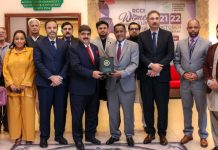
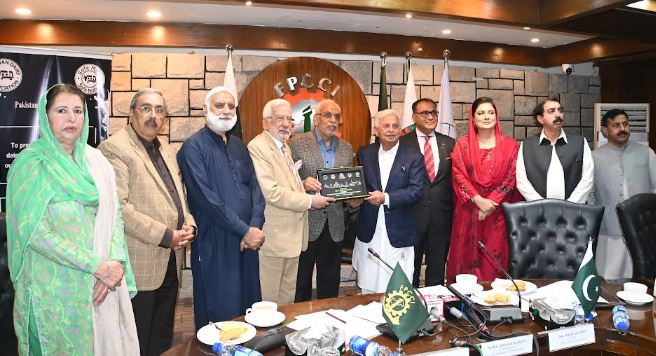
At the end, Mr. Karim Aziz Malik, Chairman / Incharge FPCCI Capital Office, presented the FPCCI Crest to the Chief Guest. The conference was attended by FPCCI office bearers, members of the FPCCI Dairy Committee, leading dairy processors, farmer associations and representatives of federal ministries, the Capital Development Authority and the Islamabad Food Authority.