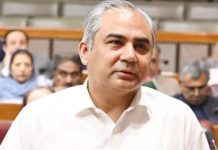
QUETTA, MAY 15: Pakistan Peoples Party (PPP) Chairman Bilawal Bhutto-Zardari inaugurated 11 health initiatives for Balochistan on Friday, including an air ambulance service, health insurance for government employees, and a modern digitalised healthcare system.
The initiatives aimed at strengthening emergency response capacity and improving healthcare access across the province, particularly in remote and underserved areas.
Discover more
News channel subscription
Global conflict analysis
Geo News app
The newly inaugurated projects included the Peoples Air Ambulance, Peoples Welfare Programme, Trauma Emergency and Response Institute, Benazir Ambulance Services for Emergency Situation, Health Information and Digitalisation Unit, restoration of basic health centres in Balochistan, health insurance programme for government employees, expansion of Child Life emergency services, strengthening of immunisation programmes, Bacha Khan Memorial Hospital, and drug-resistant tuberculosis (TB) treatment centres.
Addressing the inauguration ceremony in Quetta, Bilawal said regional and global instability had been worsening Pakistan’s economic challenges.
He thanked the chief minister, governor, parliamentarians, PPP leaders and party workers for their continued support in advancing public welfare initiatives across Balochistan.
He stated that every citizen of Balochistan had the right to receive free and quality healthcare services, adding that the state must ensure equal healthcare provision regardless of income or social status.
PPP chairman Bilawal Bhutto Zardari inaugurates Peoples Air Ambulance in Quetta on May 15, 2026. — Screengrab via X/@MediaCellPPP
PPP chairman Bilawal Bhutto Zardari inaugurates Peoples Air Ambulance in Quetta on May 15, 2026. — Screengrab via X/@MediaCellPPP
He emphasised that healthcare facilities should be delivered to people at their doorstep, particularly in remote areas.
Bilawal said the air ambulance service was essential for Balochistan and confirmed that it had been inaugurated to provide emergency medical support in far-flung regions.
He added that a new trauma centre had been established in Quetta with modern facilities, marking a significant advancement in emergency healthcare infrastructure.
The PPP chairman said he was pleased that basic health units in Quetta had been operationalised, improving access to primary healthcare services.
He noted that the ChildLife Foundation is working across eight districts of Balochistan to expand pediatric emergency care in collaboration with health authorities.
He stressed that providing dialysis services in remote areas remained critically important, while efforts would be made to extend the services of the Sindh Institute of Urology and Transplantation (SIUT) to Balochistan in the future.
Bilawal further said that routine immunisation coverage in Quetta had improved significantly, reaching 50%, which he described as a commendable development.
He noted that neonatal mortality rates had previously been higher in Sindh but had since declined due to improved healthcare interventions.
He added that such measures would help bring maternal and child mortality rates under greater control through sustained reforms.