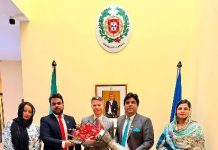
ISLAMABAD, JUN 3: /DNA/ – Malaysia’s flagship Malaysian Technical Cooperation Programme (MTCP) has played a significant role in developing human capital not only in Malaysia and ASEAN countries but across the globe, Malaysian High Commissioner to Pakistan, Dato’ Mohammad Azhar bin Mazlan, said on Wednesday.
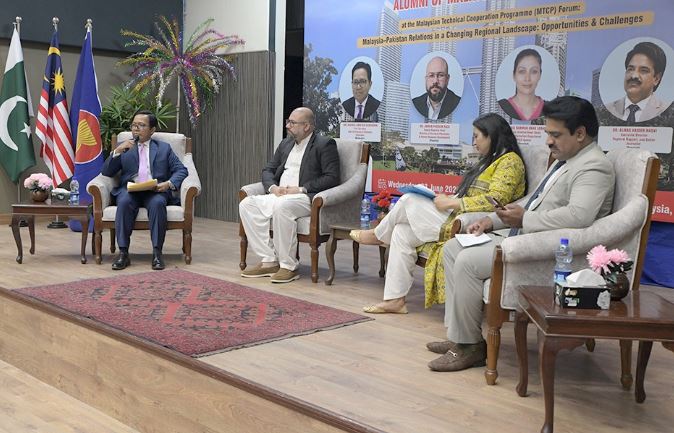
Addressing a gathering of alumni of the MTCP and Malaysian universities at the Malaysian Embassy in Islamabad, the envoy said that around 850 Pakistanis had completed various training programmes in Malaysia under the initiative, contributing to nation-building and human resource development.
Malaysian High Commissioner said the programme had benefited participants from 144 countries, serving as an important platform for capacity building and international cooperation.
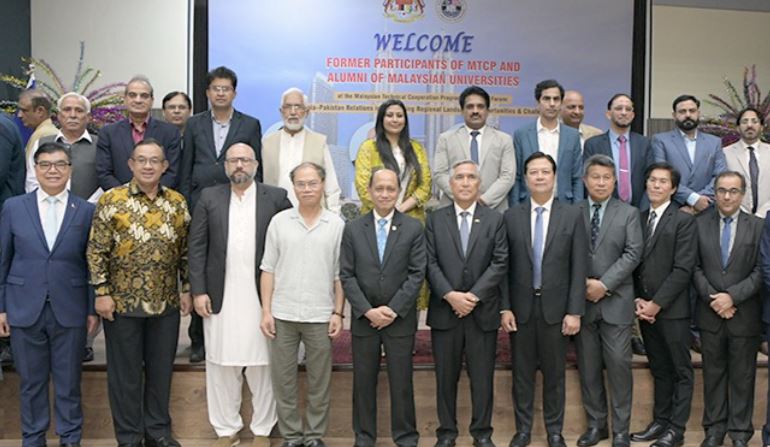
Malaysia’s MTCP trains 850 Pakistanis, strengthens “Human Capital Development”: Malaysian envoy
“Human capital is the key to nation-building and economic progress. Pakistan and Malaysia can further strengthen cooperation to enhance productivity and competitiveness in both economies,” he said.
The High Commissioner noted that more than 40,000 participants worldwide had been trained under the MTCP, which has been recognized for supporting the objectives of the United Nations, Millennium Development Goals (MDGs).
He emphasized that policy consistency had been one of the key factors behind Malaysia’s sustainable economic development and highlighted the country’s effective management of natural resources, including food preservation and seafood processing systems.
The envoy said Malaysia MTCP had also trained diplomats from five Central Asian countries and provided training to around 1,200 Afghan english-language teachers to support educational development.
Malaysia’s MTCP trains 850 Pakistanis, strengthens “Human Capital Development”: Malaysian envoy
“We believe in working together with Pakistan for mutual development and prosperity. Our cooperation spans human resource development, trade, education and economic growth,” he added.
Speaking on bilateral relations, he said the leadership of both countries remained engaged in expanding cooperation. He referred to Prime Minister Shehbaz Sharif’s recent visit to Malaysia, during which discussions focused on strengthening trade, investment and economic cooperation.
A panel discussion, moderated by First Secretary of the Malaysian Embassy Amri Kamrudi, focused on Malaysia-Pakistan relations and the experiences of MTCP and Malaysian university alumni.
Speaking on the occasion, MTCP alumnus and academician at Riphah International University, Dr Jibran Raza, highlighted Malaysia’s remarkable transformation from an agriculture-based economy in the 1960s to a high-income nation.
He said Malaysia’s success was driven by sustained investment in human capital, innovation and sustainable development policies. He also described Malaysia as a global leader in Islamic finance and fintech.
Dr. Raza noted that Malaysia’s capital market exceeds $1 trillion, compared to Pakistan’s approximately $70 billion, underscoring the scale of Malaysia’s economic development.
He identified several areas for enhanced Pakistan-Malaysia cooperation, including agriculture technology, Islamic finance, Shariah-compliant contracts, halal certification and fintech innovation.
“Pakistan faces challenges related to productivity and competitiveness, and there is much to learn from Malaysia’s development experience,” he said.
Another MTCP alumna, Asia Loudi, described the programme as a transformative bridge between the two nations that promotes cultural understanding, knowledge exchange and professional development.
Senior journalists, Almas Naqvi participating in the discussion also highlighted the growing political, economic and people-to-people ties between Pakistan and Malaysia, stressing the importance of expanding cooperation in education, trade and human resource development.
The event concluded with a renewed commitment from both sides to further strengthen bilateral relations and deepen collaboration through educational and professional exchange programmes.