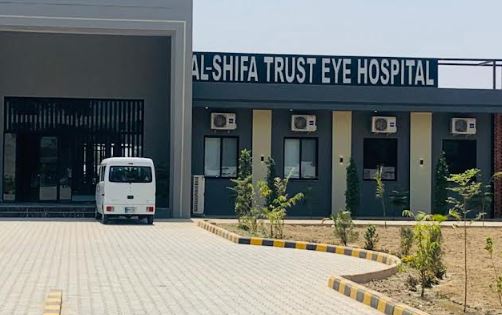
RAWALPINDI, APR 28 /DNA/ – Al-Shifa Trust’s new eye hospital in Haveli Lakha, Okara, has begun serving patients ahead of a formal inauguration scheduled for May 04, bringing specialist eye care within reach of five districts in South Punjab for the first time.
The facility, built on two acres of donated land, will serve patients from Haveli Lakha, Depalpur, Pakpatan, Sahiwal, and Bahawalnagar, areas long deprived of specialised eye treatment. The total project cost is Rs162 million, including Rs122 million for construction and Rs40 million for medical equipment. The project was made possible through generous contributions from donors, whose support helped expand access to quality eye care in underserved communities.
The hospital is designed to serve up to 250 outdoor and indoor patients daily. In Pakistan the scale of need is acute. More than 1.8 million people in South Punjab live with blindness, 85 percent of which is considered avoidable. Nearly half of all blindness cases stem from cataracts, a condition largely treatable through routine surgery, but rural populations continue to face severe shortages of trained staff and modern surgical facilities.
Pakistan’s blindness rate has declined from 1.78 percent in 1990 to about 0.5 percent, a reduction partly attributed to expanded access to cataract surgery and earlier diagnosis, though rising costs and limited facilities remain an issue. For daily-wage families in the Okara and Sahiwal belt, the new hospital eliminates the need to travel to Lahore or Multan for basic procedures, cutting both time and cost.
With Haveli Lakha now operational, Al-Shifa Trust runs seven hospitals across Rawalpindi, Sukkur, Kohat, Muzaffarabad, Chakwal, Gilgit, and Haveli Lakha, and has set up over 15,000 screening and surgical camps in remote areas. Construction has also begun on an eighth hospital in Lahore.
The trust screened more than 175,000 schoolchildren through over 550 free eye camps last year and aims to reach over two million patients and perform 120,000 surgeries in the coming year, with approximately 80 to 90 percent of all patients treated free of charge.