ISLAMABAD, Jun 29: Federal Minister for Information and Broadcasting Attaullah Tarar on Monday announced that Pakistan would host first international seminar on the Indus Waters Treaty (IWT) here on Tuesday, bringing together water and legal experts from around the world to discuss Pakistan’s rights under the treaty.
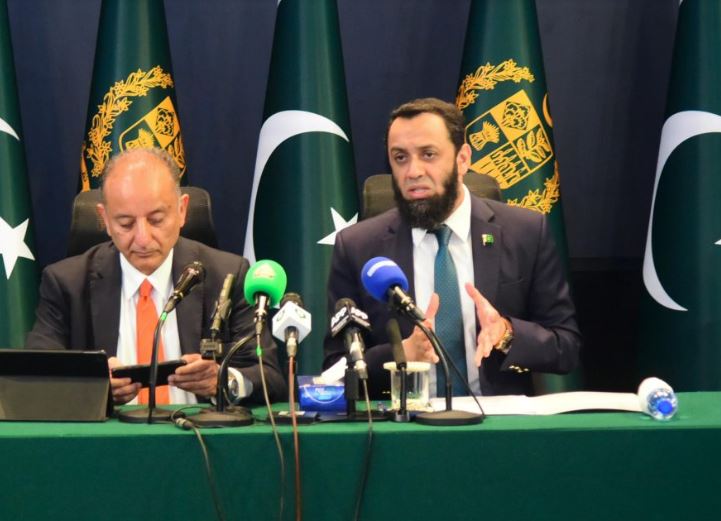
Addressing a joint press conference with Climate Change Minister Dr Musadik Malik, Tarar said experts from across the world had already arrived in Pakistan to participate in the seminar, which would explain Pakistan’s rights over its rivers under the IWT, the legal nature of those rights and the treaty’s various dimensions.
He said Pakistan’s longstanding position on the IWT had not only been recognised internationally but had also been endorsed, adding that the global community acknowledged water security as vital for Pakistan and recognised the country’s legal rights under the treaty.
Tarar said Pakistan’s position had received significant legal support internationally because the Indus Waters Treaty could neither be revoked nor terminated unilaterally, nor could it be amended by one party alone.
He stated that the treaty clearly laid down a framework that remained in force and continued to be implemented.
He said Prime Minister, Shehbaz Sharif had consistently maintained that water was Pakistan’s lifeline as well as its red line, adding that Field Marshal Syed Asim Munir had also conveyed the same message at every forum.
He said Pakistan’s people had a legal right to get water under an enforceable treaty formally accepted by both countries and still in effect.
The information minister further said that India had faced embarrassment at several international forums over its position on the treaty and that its stance had not been accepted at any forum.
“When the issue is discussed objectively, international experts have acknowledged Pakistan’s rights,” he said, adding that this represented a victory for Pakistan in the narrative domain because the country’s position on the Indus Waters Treaty was being recognised internationally.
Tarar said the seminar was being organised to raise awareness of Pakistan’s legal rights under the treaty.
Responding to questions, Attaullah Tarar said the government had taken concrete measures to protect forests and combat the impacts of climate change, while highlighting that Pakistan managed post-flood relief and rehabilitation through its own resources without appealing for international aid.
He said action was being taken against deforestation, with notices being issued and enforcement measures implemented.
He said the protection of forests was among the government’s foremost priorities, adding that the focus extended beyond the federal capital to all provincial governments, which were also placing significant emphasis on tree plantation.
The minister said Pakistan ranked among the world’s ten countries most vulnerable to climate change despite contributing less than one per cent of global carbon emissions and greenhouse gases.
“We are fully committed to this cause,” he said, adding that the government would continue efforts to protect forests and introduce further measures to promote tree plantation.
Tarar said Pakistan had consistently presented its case on climate change at every international forum.
He said Prime Minister, Shehbaz Sharif, highlighted Pakistan’s position whenever he addressed the United Nations General Assembly, while countries playing a key role in green financing had been informed that Pakistan suffered billions of dollars in annual losses due to climate change.
He said floods resulted in the displacement of people, significant economic losses, and loss of human life.
The minister said that during the recent floods, Pakistan, for the first time, did not appeal for international aid.
He said it was a joint decision of the federal and provincial governments to rehabilitate affected people through domestic resources, help them rebuild their lives with government funds, resettle them in affected areas and manage relief and disaster response independently.
Tarar described the decision as a responsible and conscious step by the government, saying the country handled the post-flood damage on its own.
He acknowledged that many countries had made commitments regarding green finance at various international forums, but said Pakistan was relying on its own capabilities.
“As the country’s economic situation has improved, Pakistan is now in a position to manage relief and disaster response independently,” he said.
He added that Pakistan also extended humanitarian assistance to other countries whenever they were affected by disasters.