
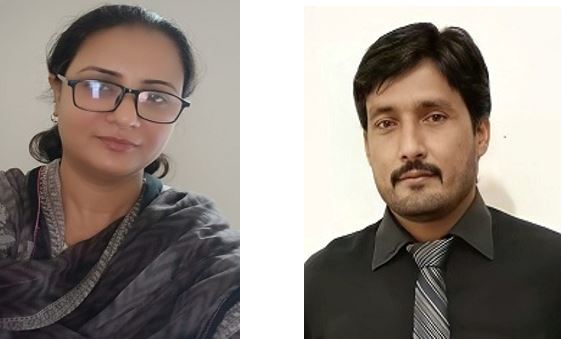
Authors: Nadia Thalho | Muh. Kaleem Mayo
Walk into any big lecture hall at a public university right now. You will see one tired teacher trying to handle over a hundred students. The board says Fahm-ul-Quran. Students are sitting there, some nodding just to look busy, but most are just staring at the clock waiting for the class to end. There is no real interest or excitement in the room. The reason is simple: half the room is made of computer science, medical, or engineering students. They look at this mandatory subject and see something that has absolutely nothing to do with their actual field or their career survival.
This is not a one-off thing. It happens every single day across universities in Pakistan. The Higher Education Commission recently made both Fahm-ul-Quran and Artificial Intelligence compulsory for everyone, no matter their degree. On paper, it sounds great to mix moral values with new technology. But when these policies leave the offices and enter a real classroom, the whole plan falls apart. It is the same old story we see in our country all the time: a huge gap between what policymakers dream up and the actual resources available on the ground.
This sudden loading of extra subjects hurts everyone from BS students to PhD researchers. A fresh BS student is already struggling. They just came out of college, they are trying to figure out the semester system, manage their credit hours, pass compulsory Islamic Studies, and deal with their core subjects. For them, just surviving the first year is a massive struggle.
Then look at MS, MPhil, and PhD scholars. Their pressure is on a completely different level. They have to collect data, run lab experiments, give seminars, and write a thesis that will be checked internationally. Shoving general compulsory courses into their final research years is a direct attack on their mental focus and capacity.
We have to ask the people making these rules: what are these extra courses actually giving to the students? Are they making them better human beings? Are they teaching them real, practical skills? The answer is no. These courses are not building innovation or deep thinking. They are just making students exhausted.
When a student knows a mandatory course has zero value for their actual career, they completely tune out. They stop trying to learn and just try to survive. They show up just to get attendance, treat the assignments like a boring chore to clear credit hours, and study just enough to pass and save their GPA. Instead of producing sharp minds who can help the country, the system is turning smart students into machines that just carry a heavy load of books. We are handing out degrees, but the actual quality of our graduates is dropping fast.
The real breakdown starts with how we teach things from the beginning. In Pakistan, a child usually finishes reading the Quran at age 9 or 10 at home or in a neighborhood madrassa. At that young age, the whole focus is only on correct pronunciation (Zer, Zabar) because mistakes change the meaning. Translation and actual understanding are never taught at that stage.
Now, expecting a student who never learned basic Arabic meanings as a child to suddenly understand deep philosophical concepts in a university classroom makes no sense. It is like teaching a child only the alphabet and then expecting them to write professional poetry when they grow up.
This lack of foundation becomes a disaster because of the state of our public universities. There is a massive shortage of teachers, leading to crowded classrooms with a 1:100 teacher-student ratio. In a room with a hundred students, the teacher is lucky if they can just manage the crowd and finish the lecture. There is no time for discussions, questions, or real character building. The exact same issue ruins the compulsory AI courses. Without working computer labs, hundreds of arts and social science students are forced into rooms just to memorize computer theories from a whiteboard.
The logical fix is to change the timeline completely. These foundational, moral, and language frameworks need to be taken out of universities entirely and moved down to schools, from Grade I-X. Educational psychology shows that childhood is the best time for the brain to pick up languages, build daily habits, and absorb ethical values. If you teach translation and basic literacy slowly over a ten-year school cycle, it becomes a natural part of who the child is, without causing academic stress.
A university is supposed to be a place for specialization, advanced research, and global competition. It is not a place to fix basic literacy gaps from childhood. If Pakistan wants an innovative workforce that can compete internationally, we have to unburden our youth. If a student enters university with their basic religious, civic, and digital foundations already cleared during their school years, they can finally give 100% of their energy to their actual majors.
The HEC needs to stop making these sudden, non-rational policies. If this keeps going, our universities will just keep producing a confused generation graduates who are neither experts in their professions nor ethically grounded citizens. It is time for a realistic, logical change in the curriculum that respects the different stages of education and protects our students.