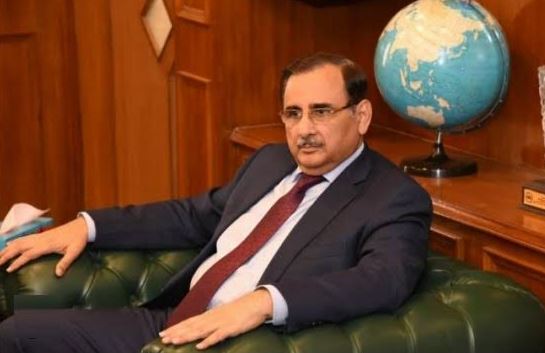
Mian Anjum Nisar pushes for new strategy amid falling exports to Europe
ISLAMABAD, MAR 29 /DNA/ – Pakistan’s export sector is facing mounting pressure as shipments to key European markets show signs of stagnation despite continued access under the GSP+ scheme. The Federation of Pakistan Chambers of Commerce and Industry Businessmen Panel (BMP) has expressed serious concern over the declining momentum, warning that without immediate corrective measures, the country risks losing its competitive edge in global markets.
BMP Chairman and former FPCCI president Mian Anjum Nisar highlighted that Pakistan’s exports to the European Union are not growing at the pace required to sustain economic stability. While official figures from the State Bank of Pakistan show a marginal increase of 0.95% to $6.122 billion during July–February FY2025-26, the growth is largely stagnant when adjusted for inflation and rising costs.
He noted that the slowdown is particularly evident in Western and Northern Europe—regions that traditionally account for the bulk of Pakistan’s exports. Countries such as Germany, the Netherlands, France, and Belgium have recorded consistent declines, signaling weakening demand and growing competition.
The situation is further complicated by global geopolitical developments. The recent free trade agreement between the European Union and India, along with ongoing Middle East tensions, is expected to intensify competition and suppress consumer demand in Europe due to rising energy prices and economic uncertainty.
The BMP leadership has strongly criticized the government’s economic and trade policies, terming them “short-sighted and disconnected from ground realities.” According to Mian Anjum Nisar, the persistent decline in export growth is not merely due to external factors but also reflects internal policy failures.
He pointed out that exporters are grappling with high energy tariffs, expensive financing, and a volatile currency environment. “Our industries are paying significantly higher electricity and gas prices compared to regional competitors like India and Bangladesh. This alone is eroding our price competitiveness in international markets,” he said.
The BMP also expressed concern over inconsistent policy frameworks. Frequent changes in tax regimes, delays in refund payments, and lack of clarity in export incentives have created uncertainty for businesses. Exporters, particularly in the textile sector, are struggling to plan long-term strategies due to unpredictable government decisions.
Mian Anjum Nisar further criticized the government for failing to effectively utilize the GSP+ status. While the scheme provides duty-free access to European markets, Pakistan has not been able to diversify its export base or move up the value chain. Instead, exports remain heavily concentrated in low-value textile products.
Another major issue raised by BMP is the lack of proactive trade diplomacy. The EU-India FTA is a clear indication that Pakistan is lagging behind in securing strategic trade agreements. “We are losing ground not because we lack potential, but because we lack vision and timely action,” he remarked.
The panel also highlighted structural inefficiencies within the export sector, including outdated industrial practices, lack of technological adoption, and insufficient support for small and medium enterprises (SMEs). These issues, combined with rising input costs, are making it increasingly difficult for Pakistani exporters to compete globally.
In light of these challenges, the BMP has put forward a comprehensive set of recommendations aimed at revitalizing Pakistan’s export sector and safeguarding its presence in European markets.
Firstly, Mian Anjum Nisar emphasized the urgent need to reduce the cost of doing business. This includes lowering energy tariffs for export-oriented industries, ensuring uninterrupted power supply, and providing subsidized financing options. He stressed that without competitive production costs, Pakistan cannot sustain its exports in price-sensitive markets like Europe.
Secondly, the BMP called for diversification of exports. Instead of relying heavily on traditional textile products, Pakistan must expand into value-added goods such as technical textiles, engineering products, pharmaceuticals, and IT services. This shift will not only enhance export revenues but also reduce vulnerability to market fluctuations.
Another key recommendation is the strengthening of trade diplomacy. The government should actively pursue bilateral and multilateral trade agreements to counterbalance the impact of the EU-India FTA. Engaging with emerging markets and exploring new trade corridors can also help reduce dependence on traditional destinations.
The BMP also stressed the importance of innovation and technology adoption. Modernizing industrial processes, investing in research and development, and promoting digital transformation can significantly improve productivity and product quality. This, in turn, will enhance Pakistan’s competitiveness in global markets.
Furthermore, Mian Anjum Nisar highlighted the need for skill development and workforce training. A skilled labor force is essential for producing high-quality goods that meet international standards. The government should collaborate with industry stakeholders to establish training programs and technical institutes.
The panel also recommended improving logistics and infrastructure. Efficient ports, streamlined customs procedures, and reliable transportation networks are critical for timely delivery of goods. Delays and inefficiencies in these areas can lead to loss of orders and damage to Pakistan’s reputation as a reliable supplier.
Mian Anjum Nisar warned that without immediate and decisive action, Pakistan risks losing its foothold in key European markets. However, with the right mix of policy reforms, innovation, and strategic planning, the country can not only stabilize its exports but also unlock new growth opportunities.