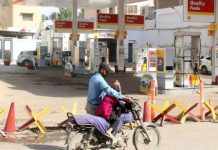
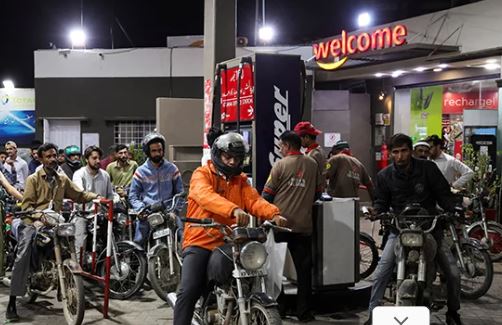
ISLAMABAD, MAR 30: Pakistan’s fuel reserves have risen to over four weeks, with supplies for both March and April fully secured, Adviser to the Finance Minister Khurram Schehzad said, terming the situation stable and improving.
“Earlier, stocks stood at 24 days, which increased to 28 days and have now exceeded four weeks,” Schehzad said while speaking on Geo News programme “Geo Pakistan” on Monday.
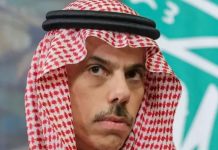
His remarks came a day after Deputy Prime Minister and Foreign Minister Senator Ishaq Dar announced that Iran has agreed to facilitate additional Pakistani vessels through the Strait of Hormuz, calling it a positive step towards peace and stability.
“I am pleased to share a great news that the Government of Iran has agreed to allow 20 more ships under the Pakistani flag to pass through the Strait of Hormuz; two ships will cross the Strait daily,” Dar said in a post on X.
Iranian threats to attack ships in the strait have kept most oil tankers from attempting the waterway. A few vessels have traversed the strait without issue, including ships under the flags of Pakistan and India, after Iranian assurances of safe passage.
So far, nearly 16 attacks have damaged at least 17 commercial ships since the war began, while around 1,900–2,000 vessels remain stranded in the region, according to Reuters.
In view of the ongoing crisis, the federal government, on March 6, announced a Rs55 per litre hike in the price of petrol and high-speed diesel each. However, it later froze petrol and diesel prices, allocating around Rs69 billion in subsidies to offset subsequent price revisions.
Speaking on the Geo News programme today, Schehzad added that crude oil inflows were continuing and being refined into petrol and diesel, further increasing stock cover. “Consider March and April fully covered; we are now looking ahead,” he said.
The adviser highlighted improved logistics, noting that Pakistan was receiving facilitation through the Strait of Hormuz. He said Iran — which has blocked the sea route for “enemy nations” — was allowing Pakistani oil shipments to move on priority, which would further strengthen fuel reserves and ensure timely supplies to refineries.
Schehzad maintained that despite limited resources, the country had avoided supply disruptions seen elsewhere. “Supplies are intact, in fact, they are improving… you stay worry-free, your stocks will not decrease,” he said.
On the fiscal side, he said the government was managing the burden of maintaining petroleum prices through expenditure cuts and austerity measures rather than calling it a subsidy. He pointed to reductions in development spending and a 20% cut in non-employee related expenditures to offset the impact.
He also outlined broader conservation steps, including reduced fuel usage by government departments, salary contributions by public officials, and work-from-home measures, saying these had collectively eased pressure.
Responding to questions on targeted relief and demand management, Schehzad said multiple strategies were under consideration but not immediately required, given the improving supply situation.
He stressed that continued cooperation between the government, provinces, and private sector would be key to managing the challenge, adding that Pakistan had so far handled the situation effectively and would continue to do so.
PM vows relief for vulnerable groups
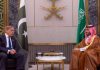
Separately, Prime Minister Shehbaz Sharif chaired a meeting in Islamabad to review the impact of the Gulf crisis on petroleum products, current fuel stocks, and measures aimed at public relief.
During the meeting, the prime minister said the government was striving to provide further relief to low- and middle-income groups, adding that economically vulnerable segments would not be left alone in this difficult time.
The meeting was informed that coordination with provincial governments was being strengthened to ensure early completion of ownership registration of motorcycle and rickshaw holders, enabling them to benefit from potential relief measures.
The prime minister said the government had reduced expenditures, cut development spending and immediately withdrawn 60 per cent of official vehicles.
He added that in the current situation, the process of sacrifice had begun with cuts in government spending, while repeated proposals to increase oil prices were rejected and savings redirected towards public relief.
He said digital systems would be utilised to ensure relief measures reached the common man, adding that despite the global crisis, timely decisions had ensured uninterrupted fuel supply. He also noted that Pakistan was actively pursuing diplomatic efforts for peace in the region.
The meeting received a detailed briefing on implementation of fuel conservation measures, future strategy proposals and current stock levels, along with an audit report by the Intelligence Bureau on progress of the government’s austerity campaign.
Participants were informed that implementation of the prime minister’s austerity drive was being ensured, with sufficient fuel reserves available to meet domestic needs and arrangements being made for future requirements.
It was also noted that an increase in levy on high-octane fuel used by luxury vehicles had not affected jet fuel prices. A briefing further stated that adequate stocks of medicines were available in the country.