“It’s an international waterway. No country is allowed to charge tolls or fees on an international waterway. That’s existing international law,” he said as he arrived in the United Arab Emirates.
Centreline Report – Abu Dhabi
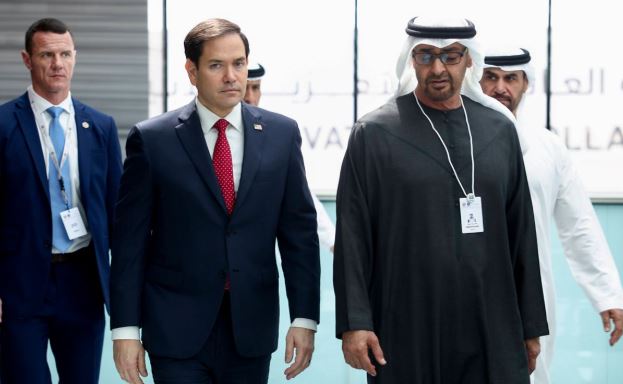
ABU DHABI: U.S. Secretary of State Marco Rubio on Tuesday firmly rejected Iran’s reported attempts to impose tolls or fees on vessels transiting the Strait of Hormuz, declaring such measures illegal under international law. Speaking to journalists upon his arrival in the United Arab Emirates, Rubio underscored that the strategic waterway must remain free for global commerce.
“It’s an international waterway. No country is allowed to charge tolls or fees on an international waterway. That’s existing international law,” Rubio stated. He added that the United States does not believe regional partners need convincing on this matter, noting, “I think all the countries in this region would agree with us.”
The Strait of Hormuz, a narrow passage connecting the Persian Gulf with the Gulf of Oman and the Arabian Sea, is one of the most critical maritime chokepoints in the world. Roughly one-fifth of global oil trade passes through the strait, making its security and accessibility vital for international energy markets. Any disruption or unilateral restrictions could have far-reaching consequences for global supply chains and economic stability.
Rubio’s remarks come amid heightened tensions between Washington and Tehran, with Iran signaling its intent to seek revenue from vessels using the strait. Analysts warn that such a move could escalate regional friction and invite strong responses from Gulf states and international stakeholders. The U.S. position, as reiterated by Rubio, is that freedom of navigation must be preserved without exception.
Regional observers note that Gulf countries, including the UAE and Saudi Arabia, have long opposed any unilateral Iranian control over the strait. They view attempts to levy fees as a challenge to international norms and a potential threat to their economic lifelines. Rubio’s comments are expected to reassure allies that Washington remains committed to safeguarding maritime routes and countering any unilateral measures.
The Secretary of State’s visit to Abu Dhabi highlights ongoing U.S. engagement with Gulf partners on security and trade issues. Discussions are likely to focus on maritime cooperation, regional stability, and collective efforts to deter threats to international waterways. Rubio’s firm stance signals Washington’s readiness to confront challenges to global navigation rights and reinforces its alignment with regional allies.