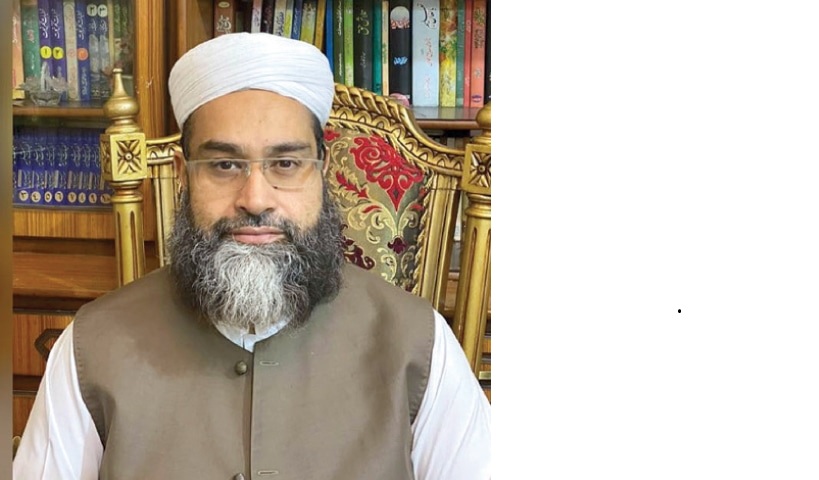
Hafiz Muhammad Tahir Mehmood Ashrafi
DNA
ISLAMABAD: Peace is not merely the absence of conflict; it is the presence of justice, mutual respect, responsible leadership and shared national objective. Nations that aspire to sustainable development must first cultivate a culture where diversity is viewed as a source of strength rather than division. In today’s increasingly polarized world, building such a culture requires more than legislation, it demands dialogue, trust and collective ownership.
It is within this broader vision that Pakistan established the National Paigham-e-Aman Committee (NPAC) – a unique national platform bringing together religious scholars, spiritual leaders, representatives of every school of thought, leaders of Pakistan’s other faith communities, and state institutions to safeguard peace, promote religious harmony and strengthen national unity. The inclusion of Christian, Hindu, Sikh and other faith leaders alongside Muslim scholars reflects Pakistan’s commitment to interfaith harmony, mutual respect and inclusive nation-building. More than a committee, NPAC has evolved into a comprehensive framework for conflict prevention, confidence-building and social cohesion, serving as a practical model of coexistence where diversity is transformed into a source of collective strength and national solidarity.
At a time when many societies continue to struggle with extremism, intolerance and identity-based polarization, Pakistan has demonstrated that consensus among religious leadership remains one of the country’s greatest strategic assets. The National Paigham-e-Aman Committee represents that consensus in action.
What distinguishes the National Paigham-e-Aman Committee from many similar initiatives around the world is its inclusive character. While rooted in the collective wisdom of Pakistan’s religious scholars and spiritual leaders, the Committee also incorporates representatives of other faith communities, thereby extending its message beyond inter-sect harmony to encompass interfaith understanding. This broad-based participation has strengthened social cohesion, reinforced constitutional protections for all citizens and projected a powerful message that Pakistan’s future rests upon unity, coexistence and equal respect for every community.
The Committee was established on a simple but powerful principle: lasting peace can only be achieved when religious leadership, government institutions, civil society and citizens work together with a common sense of responsibility. Over the past several years, this vision has steadily translated into practical results.
For the first time in Pakistan’s contemporary history, scholars representing all major schools of thought have developed and unanimously endorsed a common national framework for religious harmony through the Paigham-e-Pakistan Code of Conduct for Muharram-ul-Haram.
This landmark consensus rejects sectarian violence, terrorism, hate speech, religious vigilantism and the misuse of faith for political or ideological violence. It reaffirms the sanctity of all revered Islamic personalities, emphasizes respect for constitutional rights, protects religious minorities and reinforces the principle that differences in jurisprudence must never become a source of hostility. Perhaps its greatest achievement lies not in the document itself, but in the unprecedented unity behind it. Peace is sustained through implementation rather than declarations.
Recognizing this reality, the National Paigham-e-Aman Committee has transformed the Code of Conduct into a nationwide movement through continuous engagement with scholars, mosque leaders, educational institutions, provincial administrations and security agencies. The Committee has organized conferences, seminars and dialogue forums throughout Pakistan, bringing together religious leaders who historically rarely shared a common platform. These engagements have strengthened confidence among communities while creating mechanisms for resolving tensions before they escalate.
One of the Committee’s most demanding responsibilities has been preserving peace during Muharram-ul-Haram. Every year, Muharram tests the resilience of Pakistan’s social fabric. This year, however, the National Paigham-e-Aman Committee succeeded in building an unprecedented national consensus. Religious scholars from every school of thought jointly reaffirmed their commitment to the Paigham-e-Pakistan Code of Conduct and publicly pledged complete cooperation in ensuring the peaceful observance of Majalis, processions and Friday congregations throughout the country.
Provincial and district-level peace seminars in Islamabad, Lahore, Gujranwala, Dera Ghazi Khan and other cities reinforced the message that mutual respect, patience and restraint remain essential Islamic values.
The Committee also launched a nationwide Muharram Helpline in close coordination with the Ministry of Interior, provincial governments and law-enforcement agencies, enabling citizens, religious leaders and volunteers to report any attempt to incite violence or sectarian hatred. This initiative reflects a modern understanding of peacebuilding, combining community engagement with institutional coordination and rapid response mechanisms.
The National Paigham-e-Aman Committee has developed a strong partnership with state institutions based on mutual trust and constitutional responsibility. Regular consultations with the Ministry of Interior, provincial governments, law-enforcement agencies and security institutions have helped establish an effective mechanism for conflict prevention and crisis management.
The Committee’s engagement has demonstrated that religious leadership and state institutions are not competing actors; rather, they are complementary partners working towards the shared objective of protecting national unity and public order.
The Sixth International Paigham-e-Islam Conference represented another significant milestone in this journey. Bringing together senior religious scholars, diplomats and international delegates from across the Muslim world, the conference reaffirmed Pakistan’s commitment to moderation, dialogue and responsible religious leadership. It also demonstrated that Pakistan’s religious institutions are prepared to contribute meaningfully to regional and international conversations on peacebuilding.
The announcement that the Seventh International Paigham-e-Islam Conference will welcome leading Islamic scholars alongside representatives of other faith traditions reflects an important evolution, from promoting inter-sect harmony within Pakistan to encouraging broader interfaith understanding globally.
This collaborative approach has become one of the defining strengths of the Committee. The Committee’s vision extends well beyond Pakistan’s internal harmony. Recent diplomatic developments have reinforced Pakistan’s growing reputation as a responsible advocate of dialogue and peaceful conflict resolution.
As Pakistan continues to contribute to regional stability through constructive diplomacy, the National Paigham-e-Aman Committee has consistently supported initiatives that encourage negotiation over confrontation and cooperation over conflict.
The Committee believes that religious diplomacy, interfaith engagement and responsible scholarship can serve as valuable complements to traditional diplomacy in addressing many of today’s global challenges. Serving as Prime Minister’s Coordinator for the National Paigham-e-Aman Committee has been both an honour and a profound responsibility.
The Committee’s achievements are not the work of any single individual. They represent the collective efforts of countless scholars, Mashaykh, government officials, security institutions, provincial administrations, volunteers and citizens who have placed Pakistan’s national interest above personal or sectarian considerations.
My role has been to facilitate dialogue, build consensus and ensure that every school of thought feels equally represented and respected within this national platform. Consensus is never created through authority alone. It is built patiently through listening, consultation, mutual respect and unwavering commitment to the common good. While much has been achieved, our work is far from complete.
The National Paigham-e-Aman Committee now enters a new phase of institutional development. Our priorities include expanding provincial and district peace committees, strengthening youth engagement, promoting digital literacy to counter online extremism, deepening interfaith dialogue, empowering women as ambassadors of peace, supporting educational institutions in promoting tolerance, and enhancing international cooperation with religious and academic organizations committed to peaceful coexistence.
We also seek to position Pakistan as a global centre for dialogue among civilizations and faith communities, building upon our experience in fostering national consensus. Peace cannot be legislated into existence. It must be nurtured through education, dialogue, responsible leadership and public participation.
The National Paigham-e-Aman Committee stands as a testament to what Pakistan can achieve when scholars, institutions and citizens unite around shared values rather than differences. Our vision is clear: a Pakistan where diversity strengthens unity; where disagreement never becomes hostility; where religious freedom and constitutional values reinforce one another; and where future generations inherit a society defined by moderation, compassion and justice.
This is not just the mission of a committee, it is a national responsibility, and it is a responsibility we must continue to fulfil together with wisdom, sincerity and unwavering faith in Pakistan’s future.
The writer is the Prime Minister’s Coordinator for the National Paigham-e-Aman Committee & Chairman, Pakistan Ulema Council