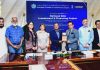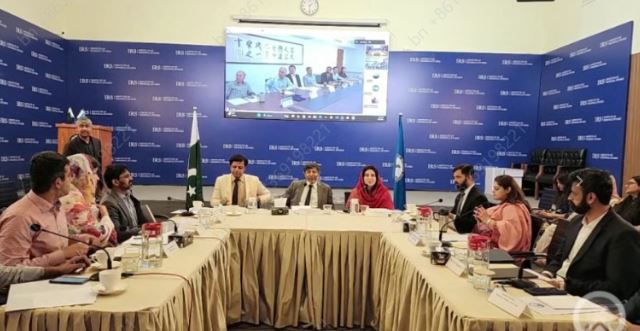
ISLAMABAD, MAY 8 /DNA/ – The Institute of Regional Studies (IRS) Islamabad, Pakistan and the Institute of International Studies (IIS), Shandong University, China, held a joint session on marking the signing of a Memorandum of Understanding (MoU) aimed at strengthening academic cooperation, policy dialogue, and collaborative research between Pakistan and China. The event was moderated by Ms. Nabila Jaffer, Research Analyst & Head China Program at the IRS, and Dr. Jamal Khan, Associate Professor at the IIS. Prof. Li Yuan, Executive Dean of the IIS, and Dr. Rizwan Naseer, Senior Research Fellow and Director of CCTVES of the IRS, introduced their respective institutions, participants, and their research areas.
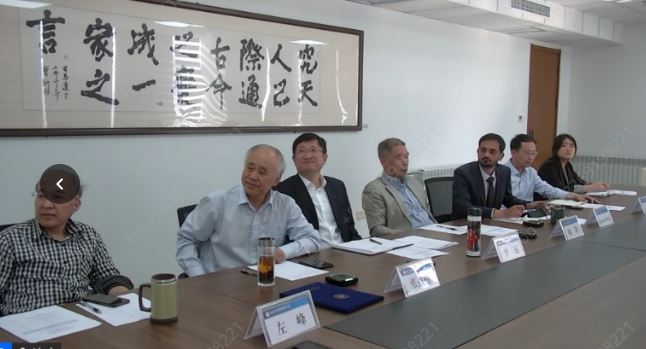
The MoU was signed by Ambassador Jauhar Saleem, President of the IRS, and Professor Zhang Yunling. Dean of IIS, during a hybrid ceremony attended by senior scholars and researchers from both institutions. The agreement established a framework for joint conferences, collaborative publications, scholar exchanges, particularly among young researchers and postdoctoral fellows, research programmes on regional and global issues, with particular emphasis on cooperation in focused research on South-South cooperation, regional connectivity, and development.
In his welcome remarks, Ambassador Saleem characterized the partnership as a meaningful addition to the longstanding intellectual and strategic relationship between Pakistan and China, referring to the two countries as ‘iron friends’ and ’iron brothers.’ He emphasized the importance of academic diplomacy, international research partnerships, and people-to-people cooperation in addressing evolving regional and global challenges. He noted that the agreement would further deepen scholarly collaboration and contribute to informed policy discourse between the two countries.
Professor Zhang Yunling termed the MoU a “new start” in reviving institutional cooperation between the two sides. He stressed the importance of strengthening scholarly exchanges and expanding cooperative research on regional, bilateral, and global developments. He also appreciated Pakistan’s constructive diplomatic efforts to promote dialogue and stability amid ongoing regional tensions, and underscored the need for greater international cooperation amid significant global uncertainty.
A substantive discussion on contemporary regional and global issues followed the signing ceremony. Analysing the evolving international environment, Ambassador Saleem underscored the need for a more effective and inclusive rules-based international order. He emphasized that sustainable peace, development, and climate security required stronger international collaboration and more effective institutional mechanisms for conflict prevention and resolution. Ambassador Saleem highlighted Pakistan’s commitment to regional peace, economic stability, and constructive engagement to prevent wider geopolitical and economic repercussions from conflict. He also acknowledged the constructive support extended by China, Türkiye, Saudi Arabia, Egypt, and the Gulf states.
Both sides reaffirmed their commitment to translating the MoU into a substantive and results-oriented partnership through evidence-based research, scholarly exchange, and sustained institutional engagement.