ISLAMABAD, JUN 28 /DNA/ – Pakistan must urgently remove banking restrictions, logistics bottlenecks and policy barriers if it wants to unlock the full potential of bilateral trade with Iran, said the Federation of Pakistan Chambers of Commerce and Industry’s Businessmen Panel (BMP), maintaining that the formal notification of Taftan Railway Station as a land customs station should be treated only as the starting point of a much broader reform agenda rather than a complete solution.
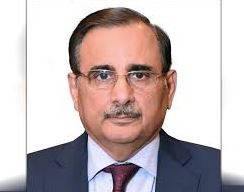
FPCCI former president and BMP Chairman Mian Anjum Nisar pointed out that the government’s latest move to formalise customs operations at Taftan would have little impact unless it is followed by rapid improvements in border infrastructure, customs modernisation, transport connectivity, warehousing facilities, digital clearance systems and practical financial settlement mechanisms. He said the business community has long been demanding comprehensive trade facilitation measures instead of isolated administrative decisions.
According to Mian Anjum Nisar, Pakistan and Iran have repeatedly expressed the desire to increase bilateral trade to $5 billion, yet actual trade continues to remain far below that target because successive governments have failed to address the structural issues confronting exporters and importers. International banking restrictions, lack of reliable payment channels, cumbersome customs procedures, inadequate rail and road connectivity, and weak border infrastructure continue to discourage formal commercial activity between the two neighbouring countries.
He said Taftan remains Pakistan’s principal land gateway to Iran and possesses enormous potential to emerge as a regional trade corridor connecting Pakistan not only with Iran but also with Central Asian markets. However, this potential cannot be realised merely by issuing notifications unless parallel investments are made in modern cargo terminals, scanning equipment, container handling facilities, cold storage, quarantine services and integrated customs operations.
The BMP chairman observed that rail-based cargo movement offers considerable economic advantages by lowering transportation costs, reducing transit time and improving supply chain efficiency, particularly for bulk commodities including minerals, agricultural products, petroleum-related goods and construction materials. Yet these benefits will remain largely theoretical unless railway infrastructure and freight services are upgraded to international commercial standards.
Mian Anjum Nisar stressed that the absence of an effective banking mechanism remains one of the biggest obstacles to expanding legitimate trade with Iran. Even when business opportunities exist, exporters and importers often face serious difficulties in settling payments because of sanctions-related financial restrictions. He urged policymakers to develop practical and internationally compliant payment arrangements that enable legitimate commercial transactions while safeguarding Pakistan’s regulatory obligations.
He further said the government should simultaneously simplify customs documentation, minimise unnecessary inspections, reduce cargo clearance time and introduce fully digital processing systems at border crossings. Efficient customs administration, he added, is essential for reducing the cost of doing business and encouraging traders to shift from informal channels towards documented trade.
The BMP chairman said informal cross-border trade continues to flourish because legal trade remains comparatively slow, expensive and administratively burdensome. Making formal trade more efficient and commercially attractive would not only increase government revenues but also improve regulatory oversight, product quality standards and transparency throughout the supply chain.
Mian Anjum Nisar also called for stronger coordination among the Federal Board of Revenue, Pakistan Railways, border management authorities, provincial governments and the private sector to ensure that policy decisions are implemented without unnecessary delays. He said businesses require predictable regulations, uninterrupted logistics services and efficient transport facilities to make long-term investment decisions.
He observed that Pakistan has significant export opportunities in textiles, pharmaceuticals, processed food, engineering products, surgical instruments and construction materials, while imports from Iran can help support domestic industry through energy products, petrochemicals and minerals. However, these opportunities will remain underutilised unless policymakers remove longstanding commercial impediments and develop an integrated trade facilitation framework.
The BMP chairman urged the government to consult chambers of commerce, exporters, importers, transporters and logistics companies while framing future policies so that reforms are aligned with ground realities instead of remaining confined to official announcements. He said the private sector’s practical experience can help identify operational bottlenecks and produce sustainable solutions.
Mian Anjum Nisar concluded that Pakistan now has an opportunity to transform Taftan into a modern regional trade gateway, but achieving that objective will require continuous policy implementation, infrastructure investment and institutional coordination. Without decisive action to eliminate banking, logistics and regulatory barriers, the country’s ambition of substantially expanding bilateral trade with Iran will remain unrealised despite incremental administrative measures.