PAEC’s emerging role in building bridges through trade, investment, education and human capital
By Humaira Latif Khan
PAKISTAN–AFRICA: FROM DIPLOMATIC GOODWILL TO STRATEGIC PARTNERSHIP
There are moments when an institution is born not merely to fill a space, but to respond to a changing world. The emergence of the Pakistan–Africa Economic Council (PAEC) represents one such moment.
For decades, Pakistan and Africa have shared cordial diplomatic relations and considerable goodwill. Yet, the real potential of this relationship remains significantly underdeveloped. What is needed now is a transition—from traditional diplomatic engagement to structured, sustainable and mutually beneficial economic, educational and institutional partnerships.
It is in this context that the vision of Ambassador Hamid Asghar Khan, Patron-in-Chief of PAEC, becomes particularly significant.
Ambassador Hamid Asghar Khan has articulated a vision that looks at Africa not simply as a destination for Pakistani exports, but as a strategic partner in Pakistan’s economic and human development. His emphasis on opening new avenues for Pakistan–Africa economic cooperation reflects an important shift in thinking: we should not merely enter African markets; we should build relationships, institutions and ecosystems within them.
The Human Capital Imperative
Africa today represents an extraordinary landscape of opportunity. Its growing economies, expanding consumer markets, youthful population, entrepreneurial energy and demand for expertise create enormous possibilities for Pakistani businesses, professionals, educational institutions and investors.
But opportunity alone does not create partnerships. Systems do.
This is where PAEC can play a transformative role.
Its potential lies in bringing together the different components required for meaningful international collaboration—government, diplomacy, business, academia, investors, professionals and civil society. Sectors such as information technology, pharmaceuticals, healthcare, education, manufacturing, professional services, investment and entrepreneurship can become important pillars of Pakistan–Africa cooperation.
As an Educationist, Analyst and System Development Expert, and serving as Director of Human Resource Development in a renowned organisation, I firmly believe that sustainable economic development cannot be achieved without developing the people and systems that drive it.
My association with PAEC as a Consultant for Human and Capital Development in International Collaboration therefore carries special significance for me.
I see international collaboration not simply as the exchange of goods and services, but as the exchange of knowledge, skills, ideas, expertise and human potential.
If Pakistan is to establish a meaningful and lasting presence in Africa, we must prepare our human capital accordingly. Our young people need international exposure. Our institutions need stronger linkages. Our businesses need market intelligence. Our professionals need cross-cultural competencies. And our educational institutions need to become active participants in international economic diplomacy.
In other words, economic diplomacy must ultimately become human-centred diplomacy.
From Trade to Trust
The next phase of Pakistan–Africa relations should not be measured only by the value of exports or the number of agreements signed.
The more important question is: How many lasting relationships are we building?
Trade can open a door. Investment can create a connection. Education can create understanding. Human capital can create capacity. But trust is what sustains a partnership.
PAEC has the opportunity to develop precisely this culture of trust and collaboration by creating platforms where Pakistani and African stakeholders can meet, understand one another, identify shared interests and convert those interests into practical ventures.
This is particularly important for Pakistan at a time when diversification of markets, expansion of exports, attraction of foreign investment and creation of employment opportunities are national priorities.
Africa should therefore be viewed not as a distant continent, but as an important part of Pakistan’s future economic geography.
An Honour to Host
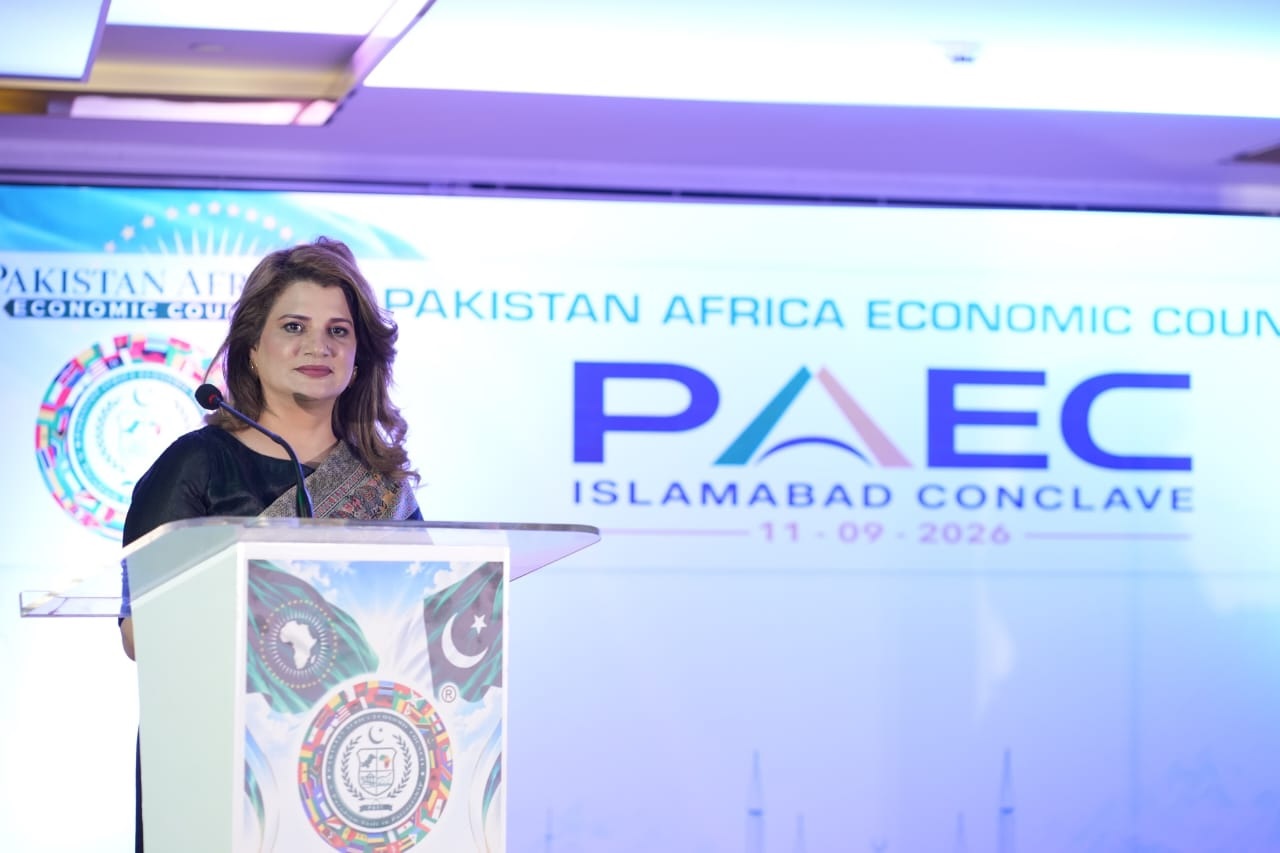
It was a distinct honour for me to host the recent ceremony on behalf of the Patron-in-Chief of PAEC, Ambassador Hamid Asghar Khan.
The occasion brought together individuals and institutions committed to strengthening Pakistan–Africa engagement and reflected the growing recognition that the relationship deserves a much more strategic and organised approach.
For me, hosting the ceremony was more than a formal responsibility. It was an opportunity to contribute to a vision in which economic growth, education, human capital and institutional development become interconnected pillars of international cooperation.
I firmly believe that the strength of any institution is determined not only by its objectives, but by the systems it builds to achieve those objectives.
PAEC therefore has the potential to become more than an economic council. It can evolve into a platform for knowledge, investment, entrepreneurship, human capital and institutional collaboration between Pakistan and Africa.
A Bridge to the Future
Pakistan has immense expertise to offer—in education, healthcare, technology, manufacturing, professional services, entrepreneurship and human resource development. At the same time, Africa offers Pakistan opportunities for investment, market expansion, innovation and learning.
The relationship should therefore never be viewed as one-sided.
Pakistan has something to offer Africa, and Africa has much to offer Pakistan.
The real opportunity lies in creating a partnership where both sides become stronger.
I deeply appreciate the vision and leadership of Ambassador Hamid Asghar Khan and the collective efforts of the leadership and members of PAEC in advancing this important agenda.
The journey ahead will require persistence, professionalism, research, institutional coordination and, above all, a long-term vision.
But every significant transformation begins with a vision.
PAEC can be that bridge—connecting Pakistan and Africa through trade, investment, education, human capital, innovation and enduring relationships.
And as someone privileged to contribute to this journey, I believe our responsibility is clear:
We must move from talking about possibilities to building partnerships; from making connections to developing systems; and from creating opportunities to creating lasting impact.
“The future belongs to those who build bridges before they need them. Pakistan and Africa now have an opportunity to build that bridge together.”
The writer is an Educationist, Analyst & System Development Expert | Director, Human Resource Development | Consultant, Human & Capital Development, PAEC