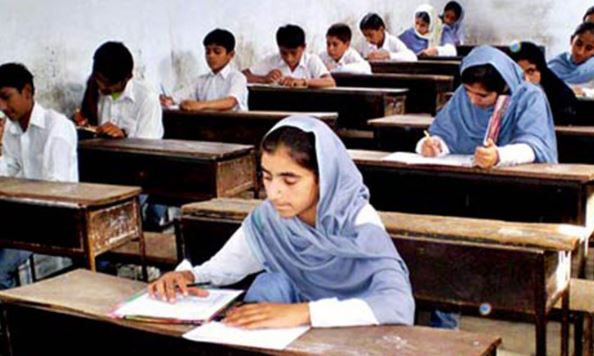
ISLAMABAD, Jun 24: The availability of basic facilities in public schools improves significantly at higher levels of education, with up to 96% of higher secondary schools across Pakistan equipped with essential infrastructure such as drinking water and boundary walls, according to official data.
Documents available with Wealth Pakistan show that access to electricity, drinking water, toilets and boundary walls increases steadily from primary to higher secondary levels, reflecting continued efforts to strengthen the learning environment in public-sector schools.
At the national level, 65% of public schools have access to electricity. However, availability rises from 59% at primary schools to 77% at middle schools, 92% at high schools and 95% at higher secondary institutions.
Similarly, access to drinking water is available in 76% of schools nationwide, increasing from 72% at the primary level to 83% at middle schools, 94% at high schools and 96% at higher secondary schools.
The data further shows that 77% of public schools across the country have toilet facilities. Availability improves from 74% at primary schools to 83% at middle schools, 90% at high schools and 92% at higher secondary institutions.
Boundary walls are present in 75% of public schools nationwide. Coverage rises from 71% at primary schools to 87% at middle schools, 95% at high schools and 96% at higher secondary schools, contributing to a safer learning environment for students.
Among the provinces and regions, Punjab and Islamabad Capital Territory (ICT) recorded the highest levels of infrastructure coverage.
Punjab reported 99% access to electricity and 100% availability of drinking water and toilet facilities, while 98% of its schools had boundary walls.
ICT recorded 99% access to electricity, 92% availability of drinking water, 97% access to toilets and 93% coverage of boundary walls.
Khyber Pakhtunkhwa also showed a strong performance, with 77% of schools having electricity, 86% access to drinking water, 85% toilet facilities and 91% boundary wall coverage. Gilgit-Baltistan recorded 65% electricity coverage, 78% access to drinking water, 76% access to toilet facilities, and 67% availability of boundary walls.
According to the documents, well-maintained infrastructure and basic facilities play an important role in improving educational outcomes by providing students with a safe, healthy and conducive learning environment. Access to electricity, clean drinking water, sanitation facilities and secure school premises contributes to student well-being and supports effective teaching and learning.
The documents note that continued investment in school infrastructure remains essential for further improving education quality and ensuring better learning conditions for students across the country.