UNITED NATIONS, Apr 15: Yemen must not be drawn into the escalating conflict in the Middle East, Pakistan has warned, stressing the need for de-escalation, political progress and urgent humanitarian funding for beleaguered civilians battered by years of grinding war.
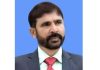
“Developments in Yemen cannot be viewed in isolation from the evolving regional security environment,” Ambassador Usman Jadoon, deputy permanent representative of Pakistan to the UN, told the UN Security Council, which debated the situation in the strife-torn country.
He also described attacks on maritime routes as “unacceptable”, insisting that the free flow of commercial shipping through the Bab-el-Mandeb must not be impeded, as they disrupt global trade, heighten risks to energy and food supply chains and would “accentuate the growing regionalization of the conflict”.
All parties must exercise the utmost restraint, the Pakistani envoy said, and fully comply with their obligations under international law.
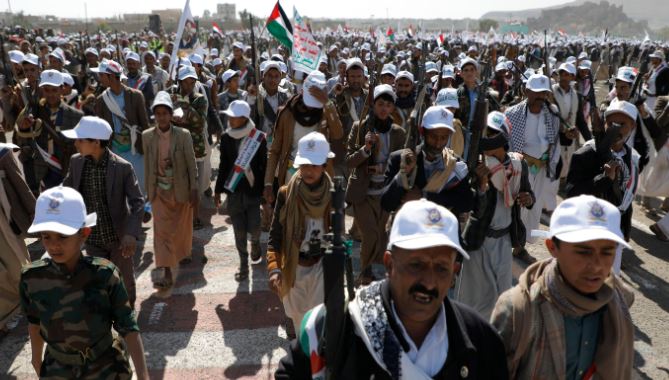
Meanwhile, the Pakistan-mediated United States-Iran ceasefire is holding, following over a month of strikes and counterstrikes in the Persian Gulf region – and in connection with that conflict, the Houthi movement’s military wing launched attacks against Israel at the end of March.
Tensions from this and earlier regional conflicts have long had implications for maritime security, and the Council adopted resolution 2722 (2024) two years ago in the wake of the Israel-Hamas war demanding that the Houthis cease attacks against merchant and commercial vessels in the Red Sea.
At the beginning of last week, China and Russia vetoed a resolution seeking to deter attempts to interfere with international navigation through the Strait of Hormuz or to threaten maritime security in the Bab-el-Mandeb Strait, the latter of which lies between Yemen and the Horn of Africa.
Ambassador Jadoon, noting that Yemen’s Presidential Leadership Council is Yemen’s legitimate authority, said the presence of competing actors with “divergent political agendas” – particularly in the south – continues to undermine unity and efforts to establish a coherent national framework.
“This fragmentation risks weakening State institutions and obstructing progress towards a comprehensive political settlement,” he argued.
The Pakistani envoy pressed all parties to demonstrate “renewed political will”, engage constructively with the Secretary-General’s Special Envoy and participate in an inclusive, UN-facilitated, Yemeni-led and -owned political process.
As regards the humanitarian situation in Yemen, Ambassador Jadoon said it remains dire and requires urgent, coordinated and sustained action.
He reiterated Pakistan’ strong condemnation of the continued arbitrary detention of UN, humanitarian personnel and diplomatic staff, as well as the unlawful seizure of UN premises and assets in areas under Houthi control.
At the outset, Hans Grundberg, Special Envoy of the Secretary-General Yemen, recalling his recent trip to Yemen’s temporary capital of Aden, said, “After a decade of conflict, the country has little margin to absorb more shocks”.
Yemenis have long faced inadequate public services, delayed salaries and rising prices, he noted.
Now, they must contend with even higher costs for fuel and food triggered by conflict in the region.
These new pressures join old ones, Grundberg added – obstruction of Government exports, division of the central bank and the “broader weaponisation of economic life that has, for too long, made ordinary Yemenis pay the price of decisions taken over their heads”.
And, despite broad de-escalation that has held since the 2022 truce, he emphasized that “this relative calm cannot be taken for granted”. Nevertheless, he underscored that Yemenis’ future must not be held hostage by that instability and that an inclusive political process must be pursued.
Edem Wosornu, Director of the Crisis Response Division for aid coordination office, OCHA, echoed Grundberg’s concerns for the 22 million and rising number of Yemenis who require humanitarian aid.
“This crisis is hitting the most vulnerable first and hardest,” she stressed, reporting that more than 18 million people face severe hunger and that two out of every three families are forced to skip meals daily. “Women and children are hit first and fastest,” she added.
On that, she reported that over two million children under five are acutely malnourished and over a million pregnant and breastfeeding women face life-threatening complications due to malnutrition.
Further, more than 19 million people lack access to healthcare and vaccine-preventable diseases are rapidly spreading.
Meanwhile, aid operations have slowed as 73 UN staff remain arbitrarily detained by the Houthis, assets have been seized, access is severely restricted and supply chains have been disrupted across the region.